
Half Term Already!

DESIGNER MAKER · OCTOBER 2026
Half a Term In: From First Dovetails to Furniture Making
It’s the final day of the first half of term, and our new two and three-term Designer Maker students have already covered an enormous amount of ground.
Just a few weeks ago, the group was getting to grips with tool preparation and sharpening. Now, with their foundation projects completed, they’re working through their first substantial piece of furniture: our Wall Hanging Cabinet.
There’s been some excellent progress across the workshop, with increasingly confident hand skills, some beautifully crisp dovetails and plenty of experimentation along the way.
01 / FOUNDATION SKILLS
Building the Foundations
The opening weeks of the Designer Maker course are deliberately structured around a series of increasingly demanding exercises. Each introduces new techniques while reinforcing the accuracy, patience and tool control developed in the previous project.
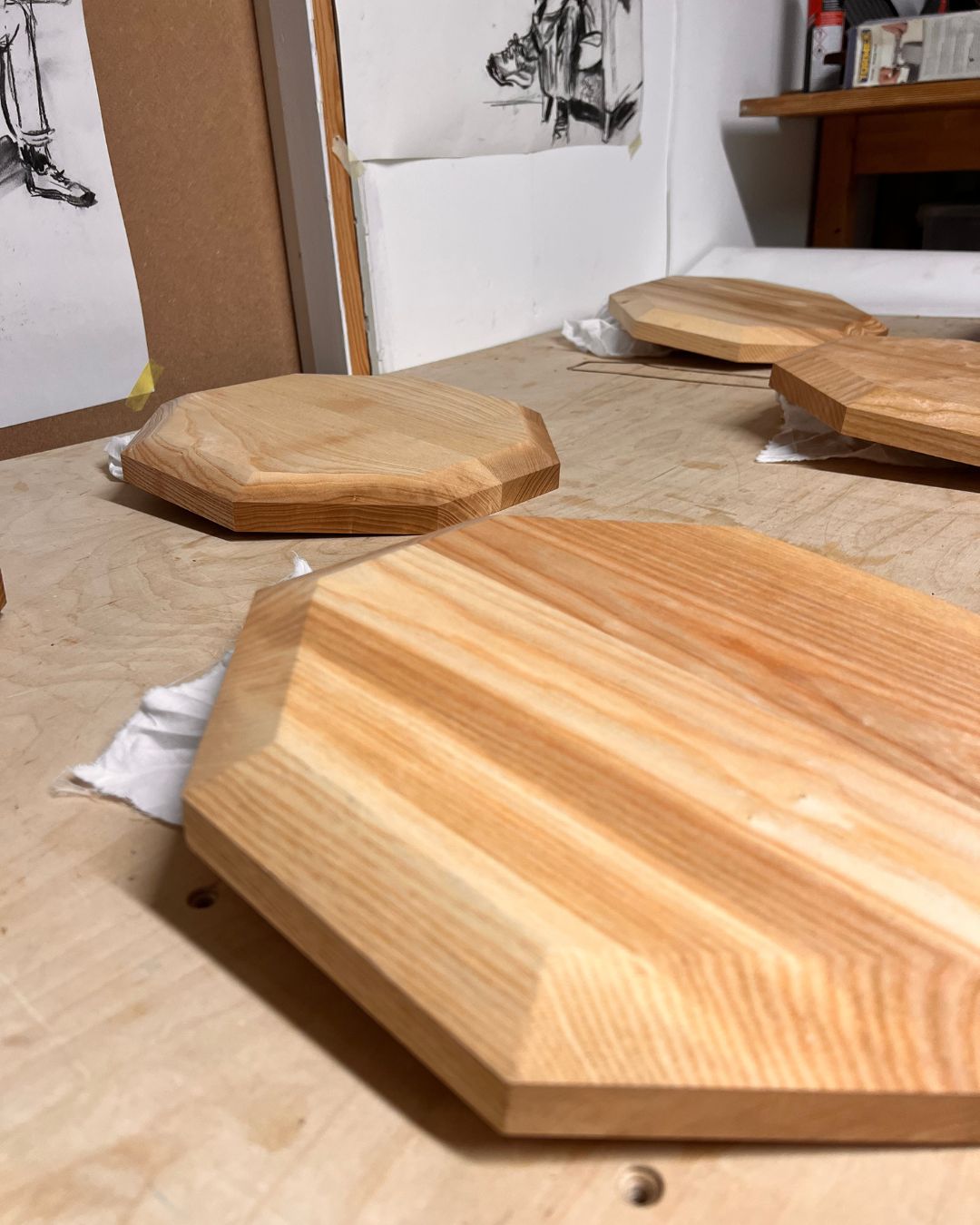
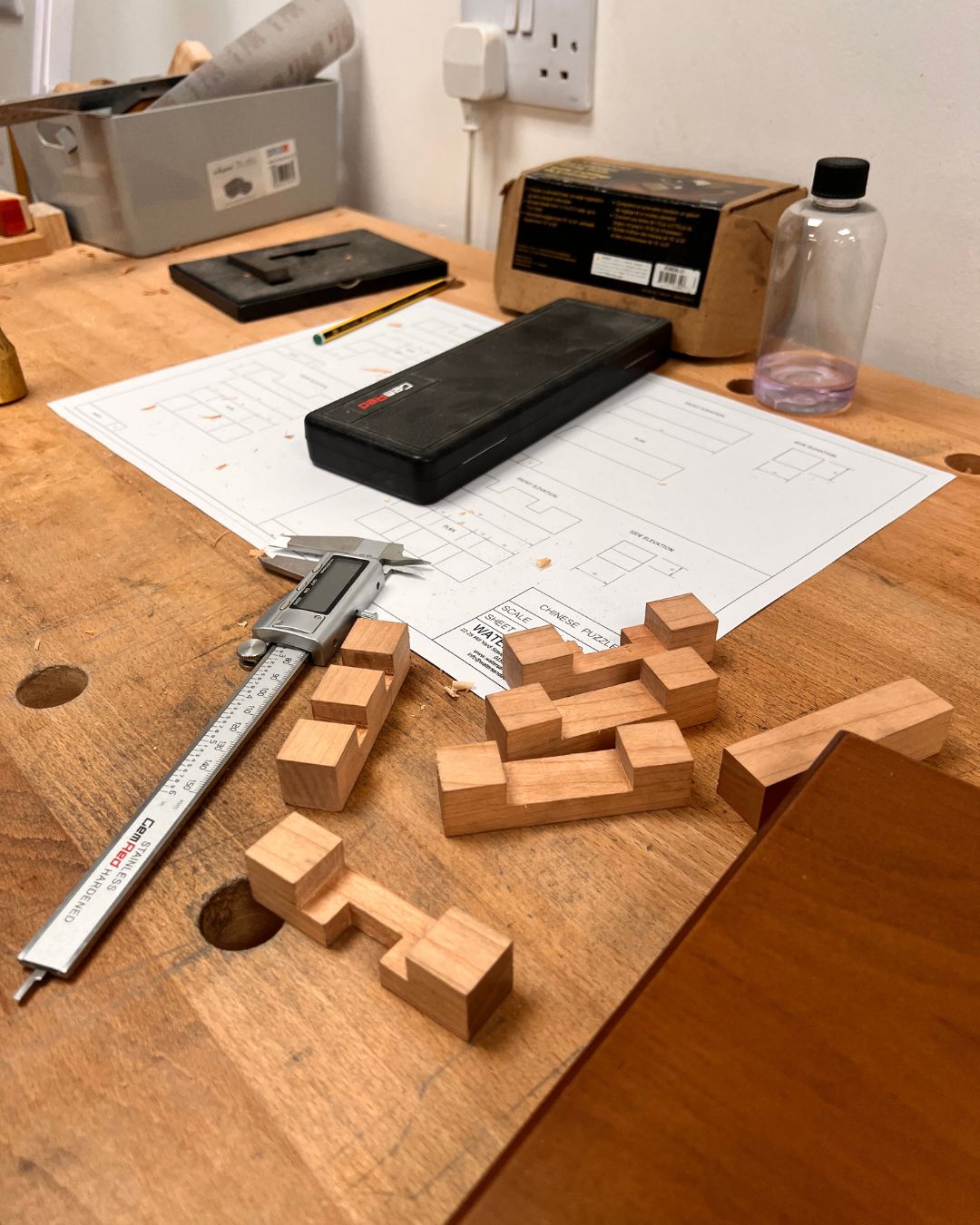
The students have now successfully completed tool preparation and sharpening, octagonal breadboards, hand-shaping exercises, the Chinese Puzzle, dovetail practice and their dovetailed bookends.
These are relatively small projects, but there’s a great deal of learning packed into them. By the time students reach the bookends, they’re combining accurate marking out, dimensioning, sawing and careful chisel work to produce properly fitting joints.
Practice Makes Progress
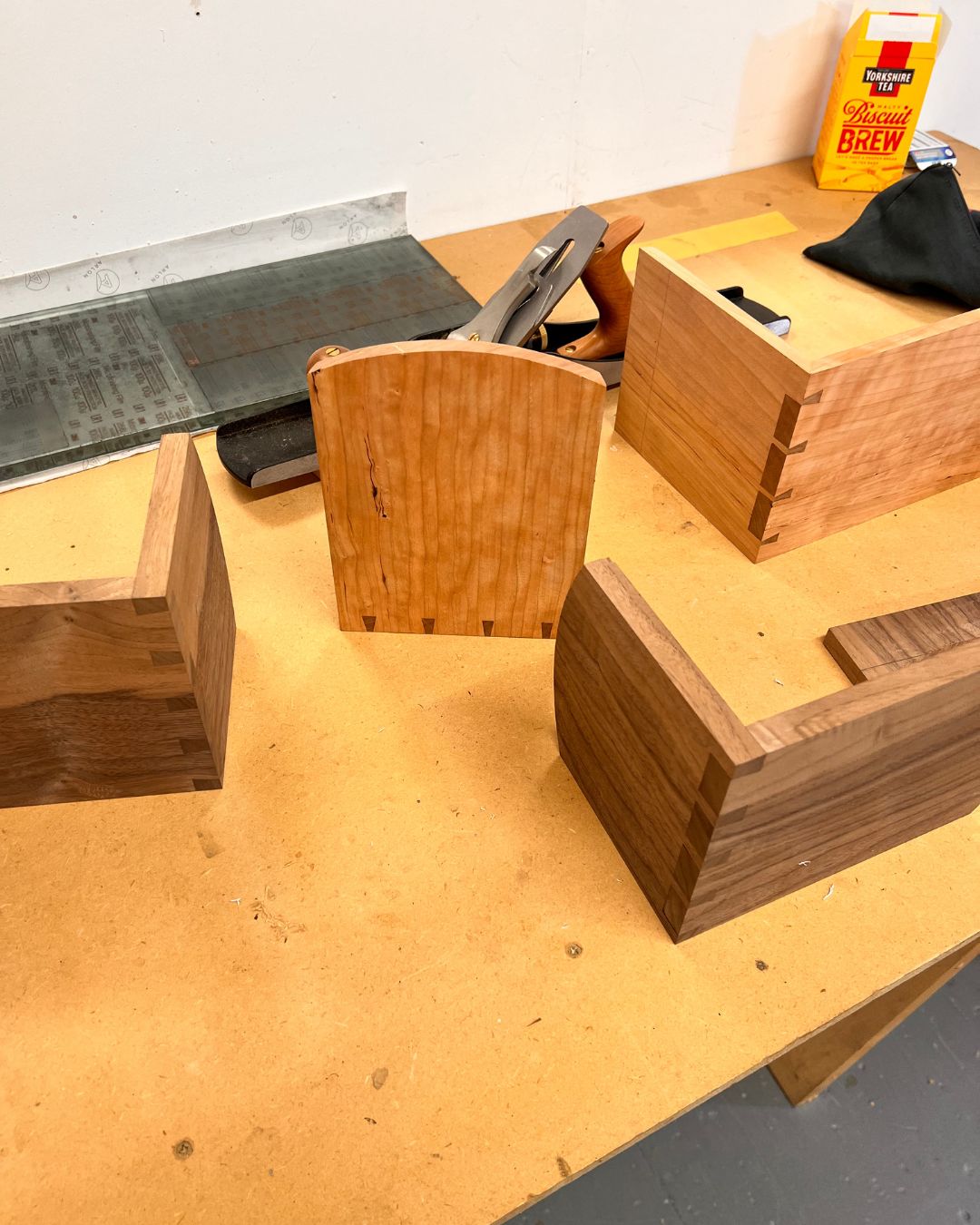
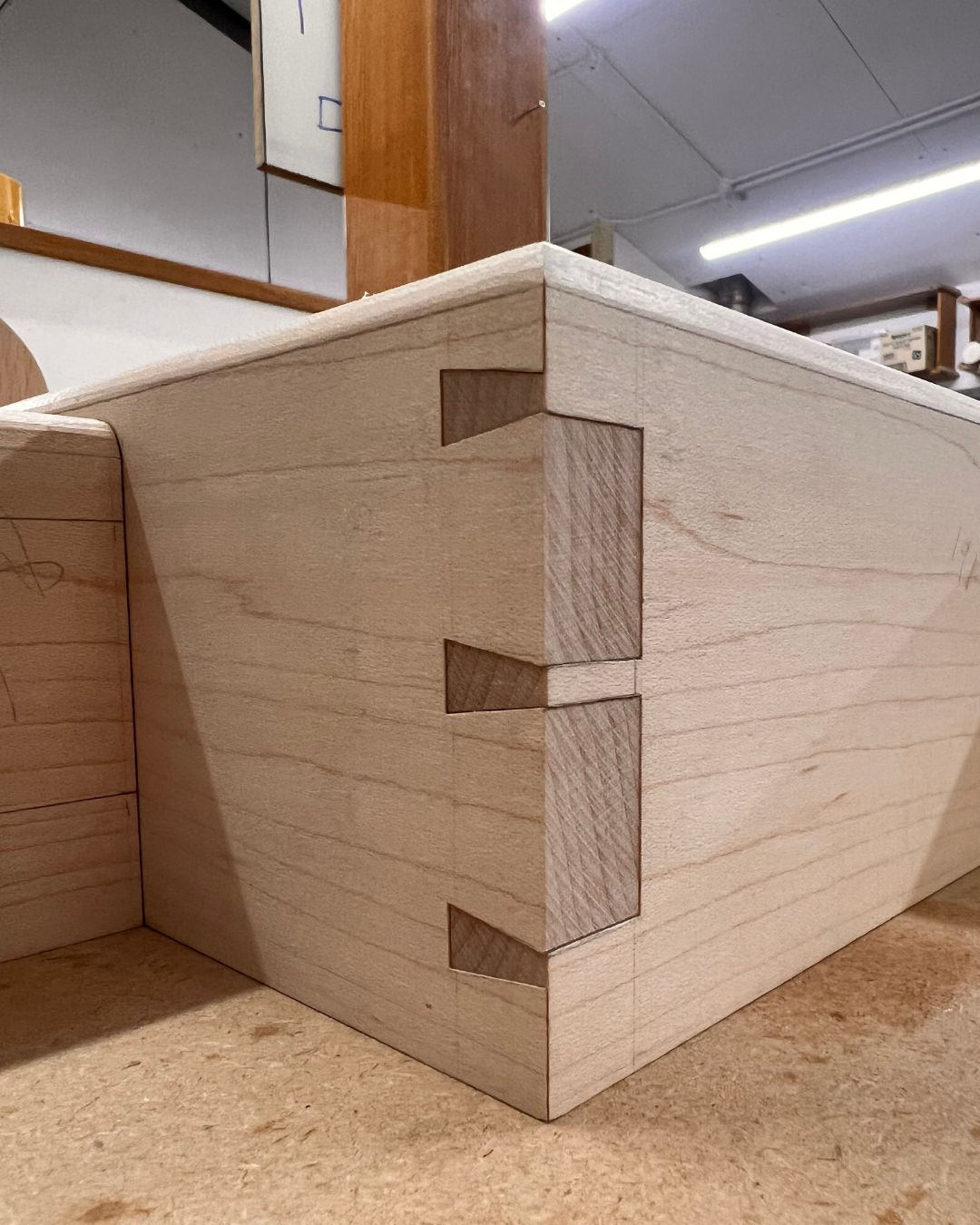
Most students have made three or four dovetailed bookends, and the improvement from those first practice joints has been remarkable.
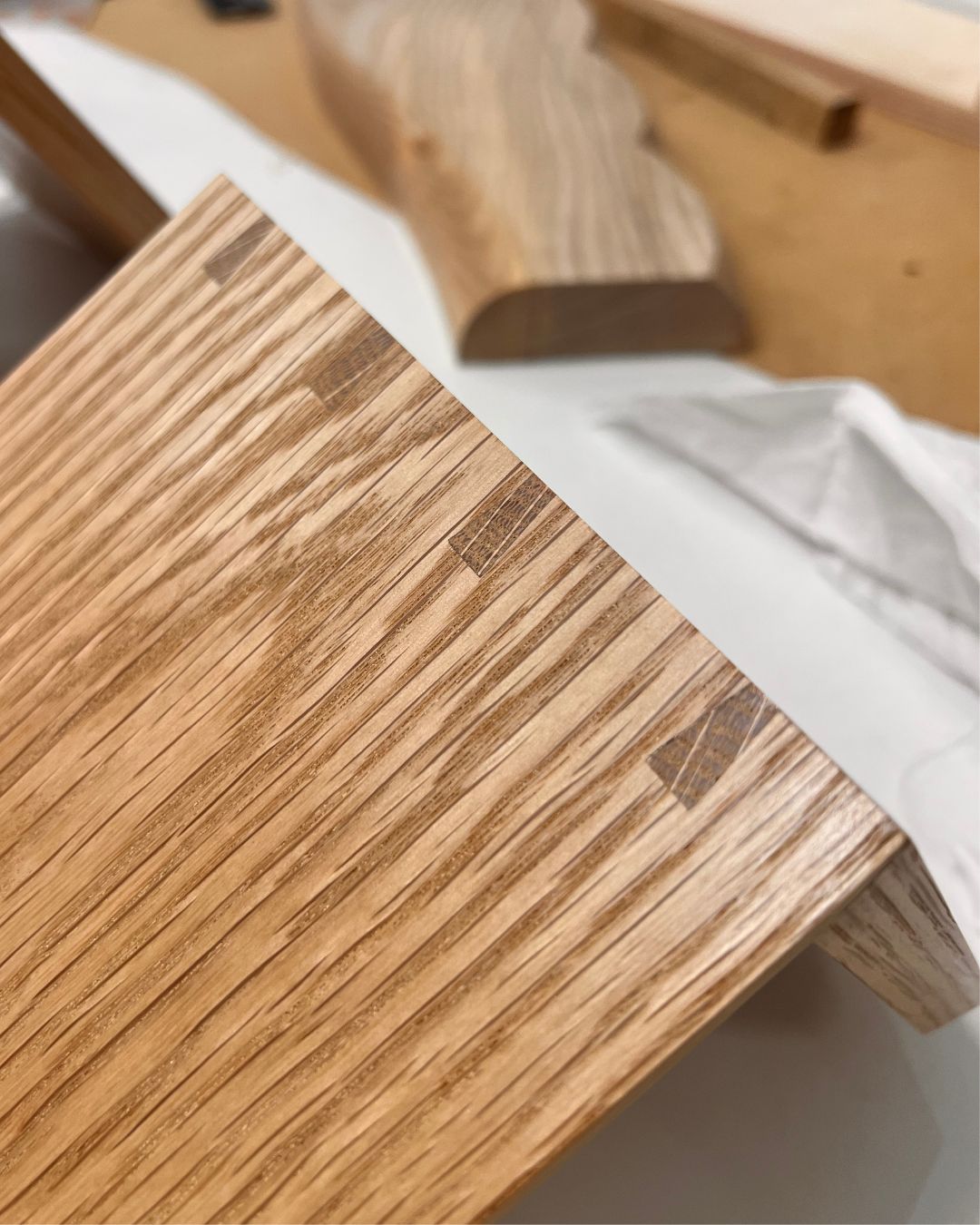
You can see just how clean and crisp the finished joints are becoming. It’s a good reminder that precision isn’t something you develop from a single successful attempt. It comes from repeating a process, recognising where things can be improved and gradually developing the confidence to work accurately and consistently.
02 / TECHNICAL PRACTICE
Learning to Shape by Hand
Alongside the set projects, the students have also spent a couple of days exploring hand shaping and relief carving. These technical sessions are an important part of the course, giving students an opportunity to develop particular skills before applying them to their furniture.
Hand shaping involves working with tools such as spokeshaves, planes, chisels, rasps and files to create forms that would be difficult, impractical or unnecessarily complicated to produce by machine.
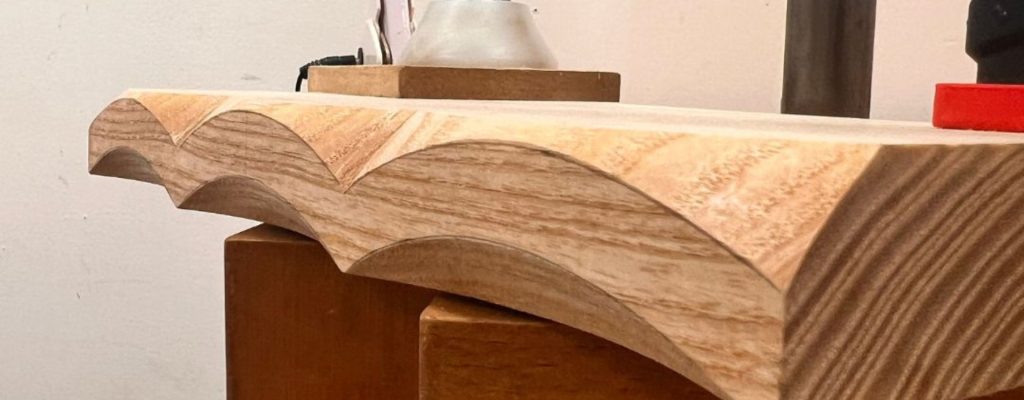
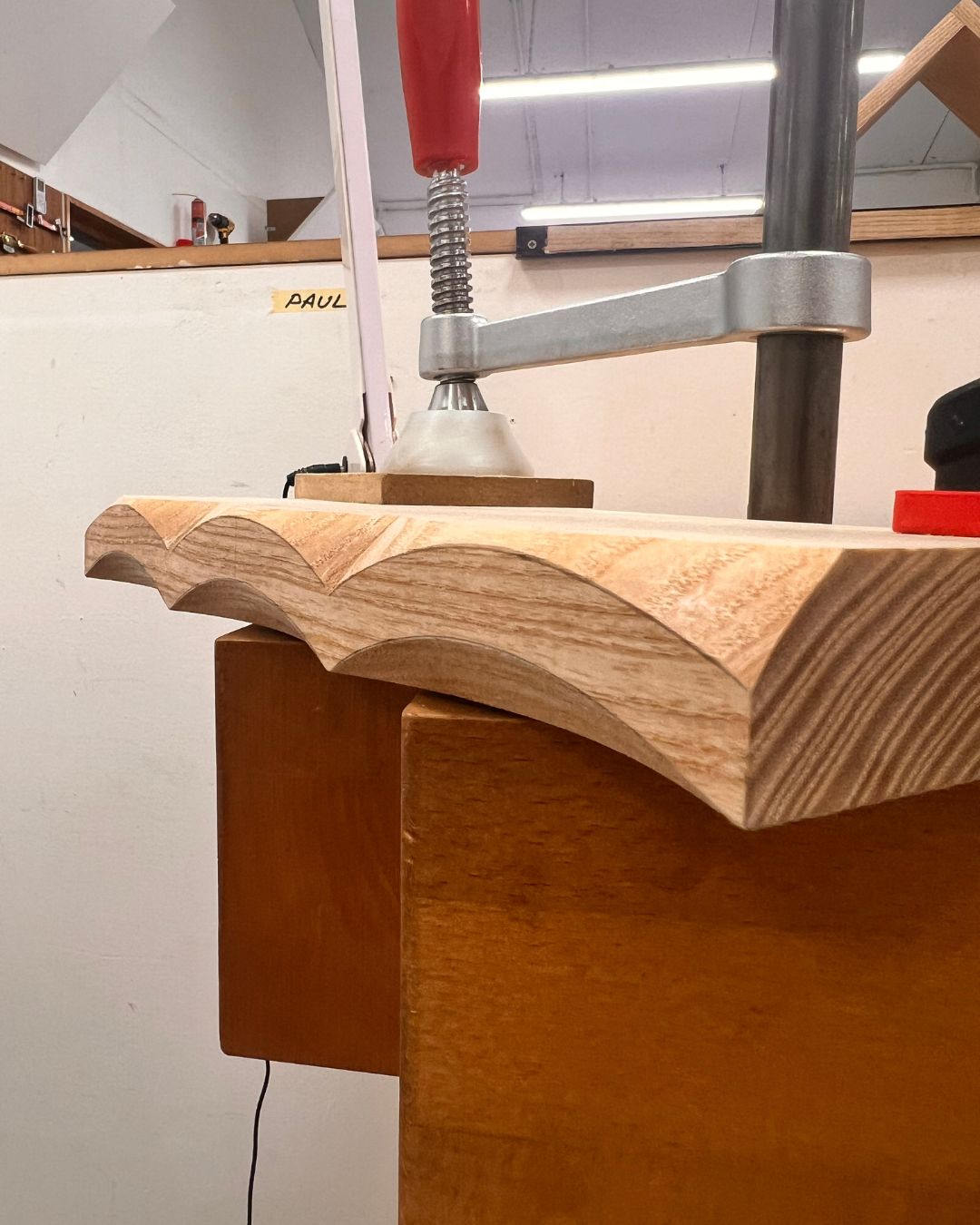
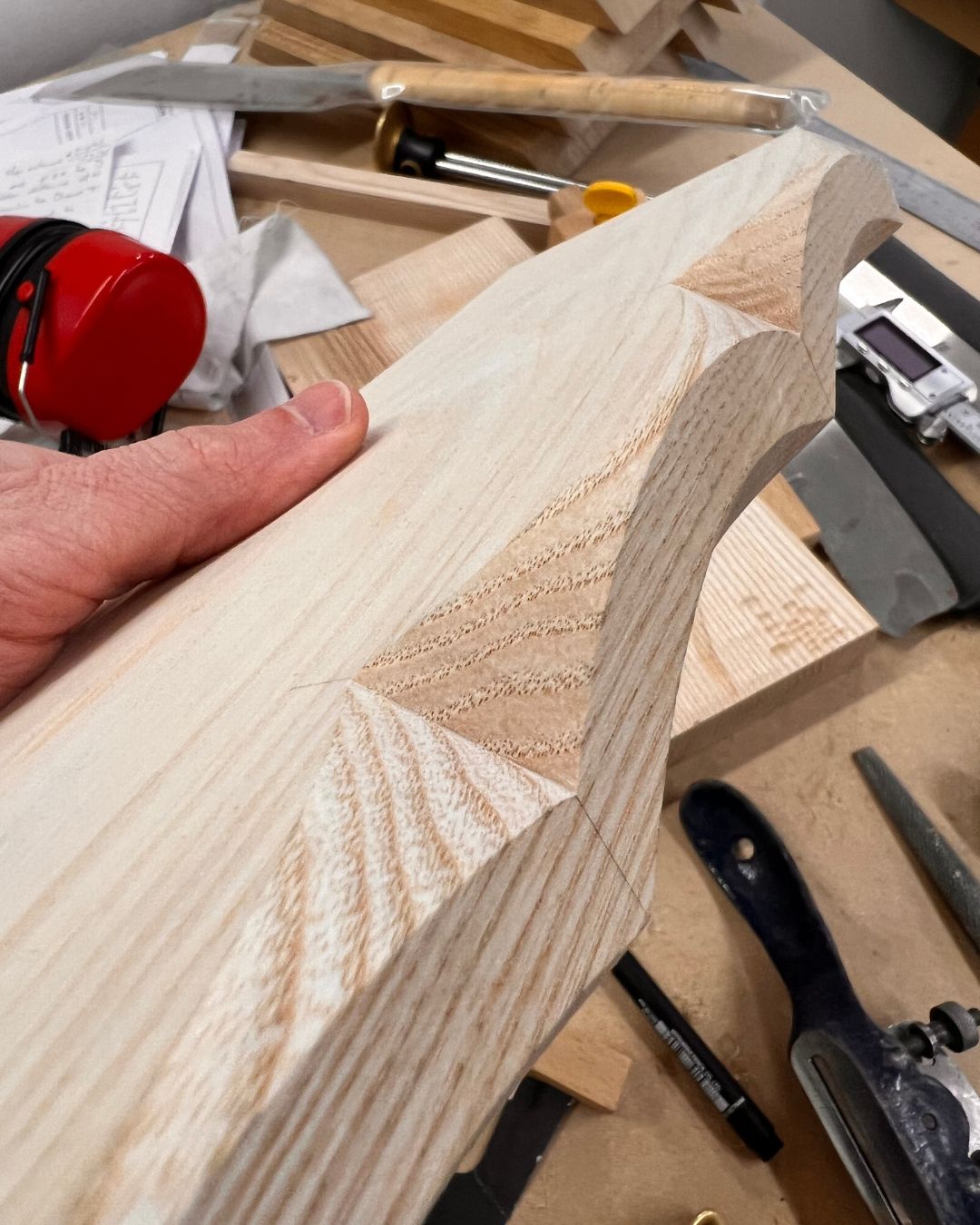
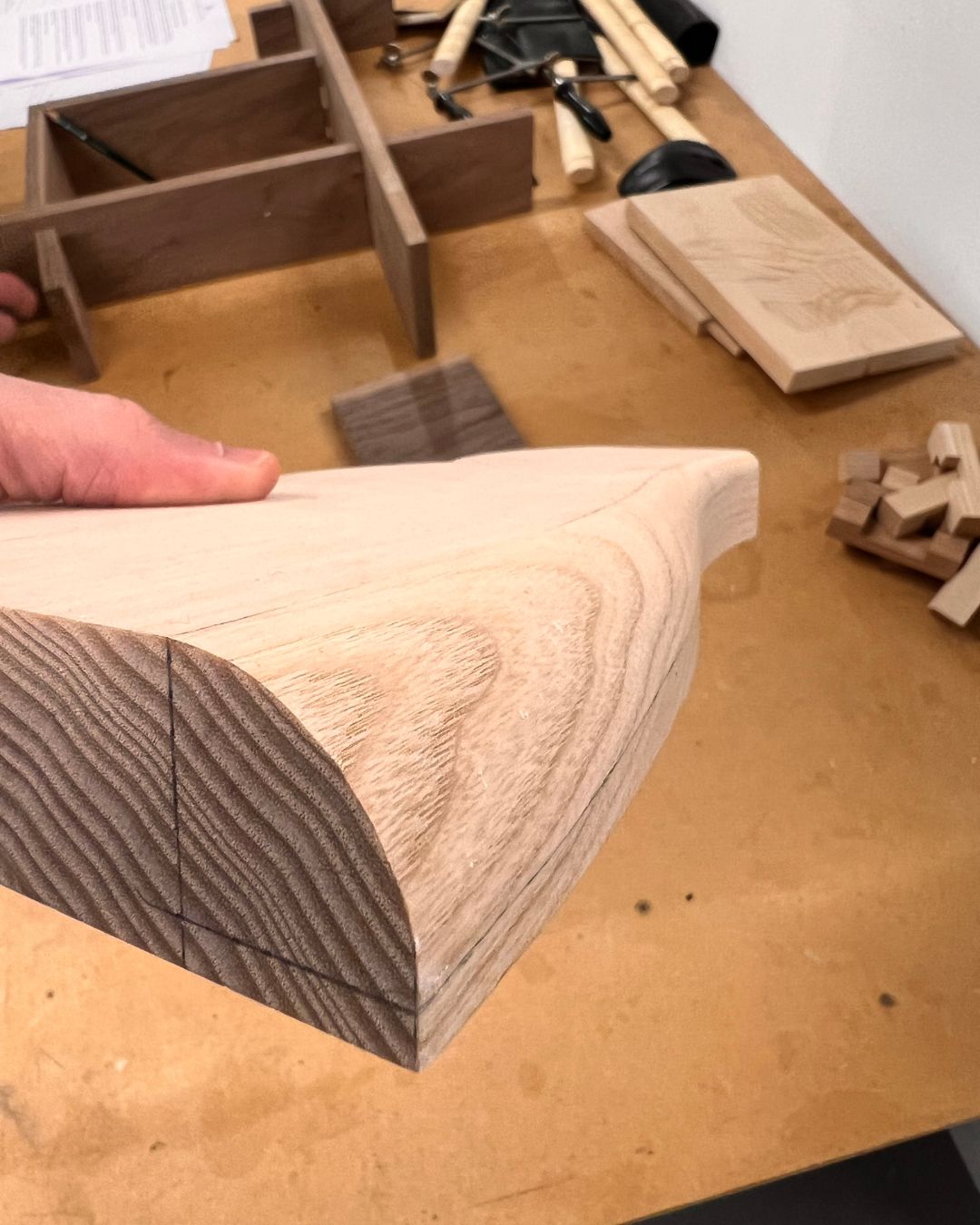
Among the exercises is a deceptively challenging piece of shaping: creating a series of curved, tapering chamfers along the edge of a board.
Students work with both concave and convex forms, using spokeshaves, chisels and fine files to develop smooth transitions and consistent curves. The aim isn’t simply to reproduce a shape, but to understand how the tools behave and how to control the surface as it develops.
Understanding the Material
There’s an important reason we spend time on exercises like these. Working directly with wood develops a much better understanding of the material itself: how it cuts, how the grain changes, which forms are practical and where a particular technique might be useful.
That understanding becomes increasingly valuable as students begin designing their own work.
Good furniture design isn’t just about imagining an interesting form. It’s about understanding how that form can actually be made.
The relationship between designing and making is central to our teaching. We believe the most interesting and successful solutions often come from a genuine understanding of process, developed through practical experience.
03 / EXPLORING SURFACE DETAIL
A Little Relief Carving
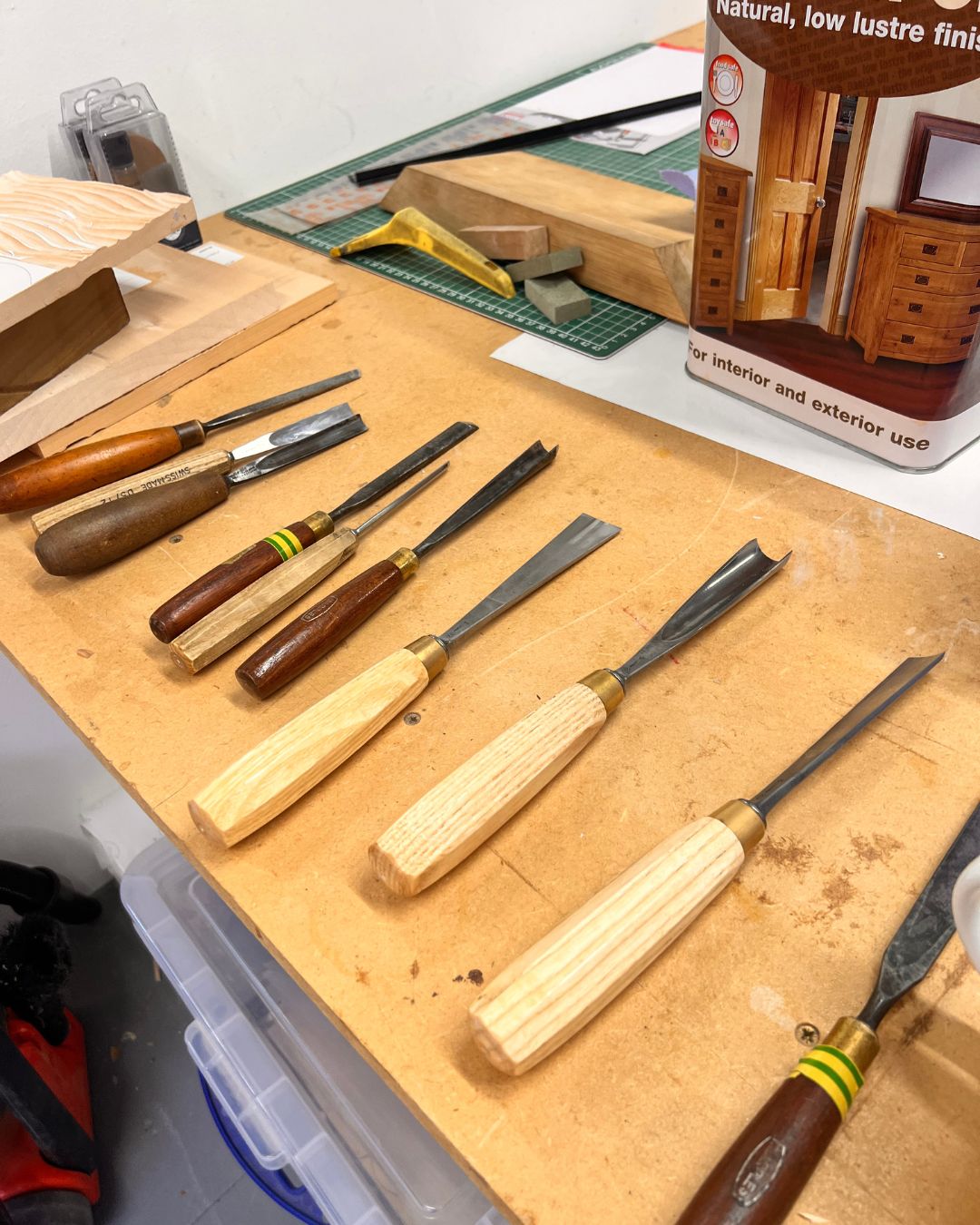
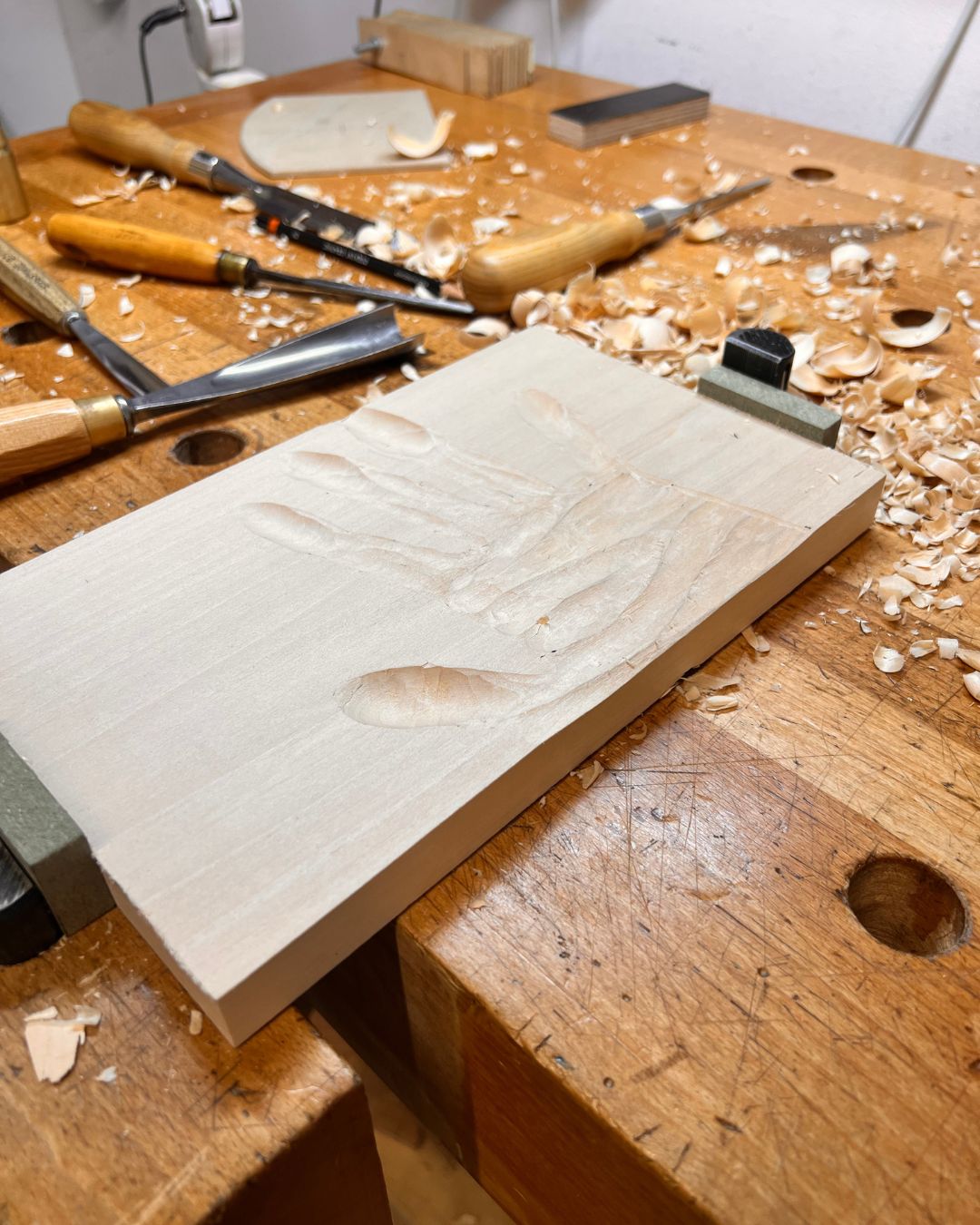
The second technical exercise introduced relief carving, giving the students another opportunity to explore shape, surface and decorative detail.
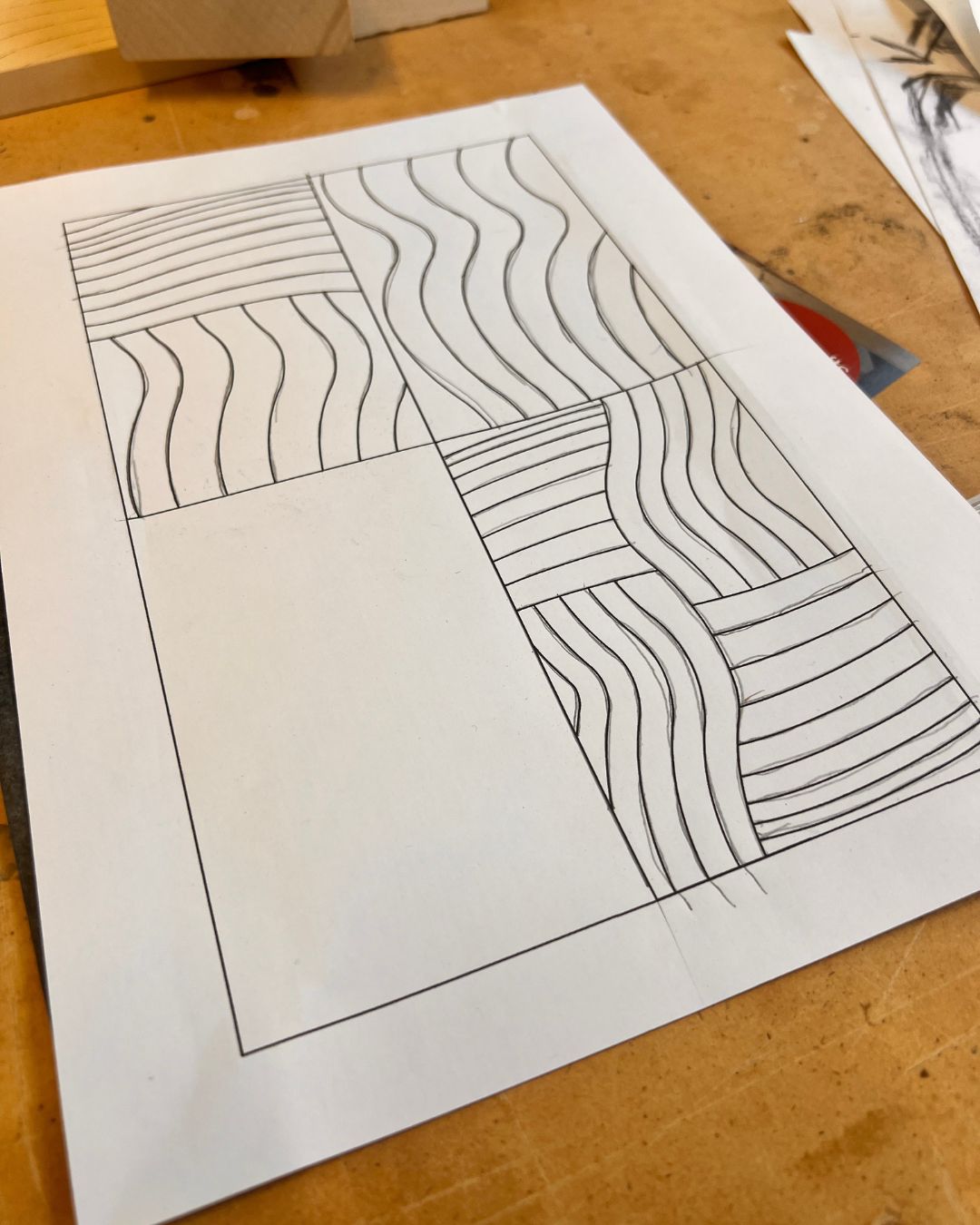
Working from paper templates, the students began transferring designs onto timber before using carving tools to remove material and develop the relief.
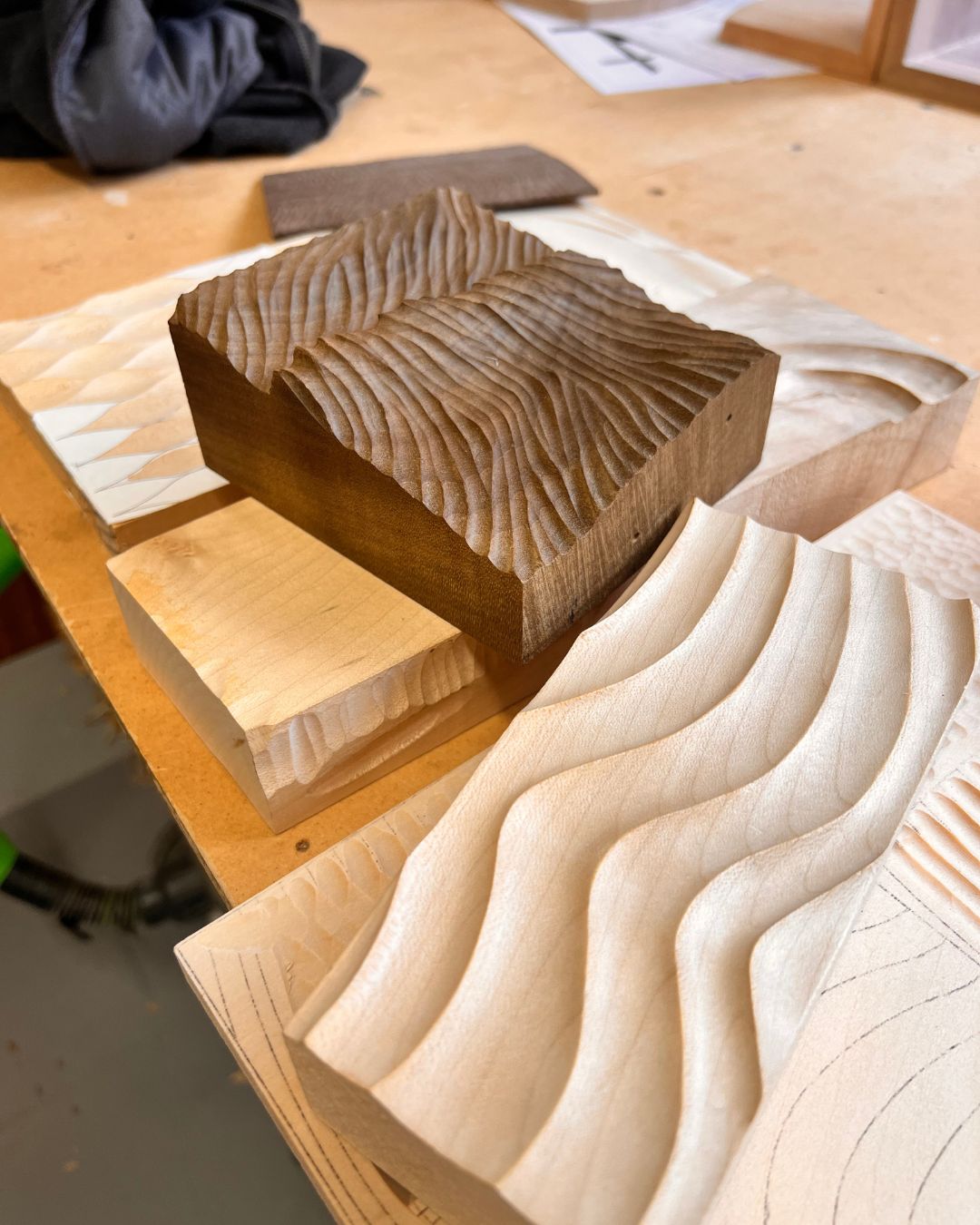
We have a collection of example blocks at the school to demonstrate different approaches, but there’s plenty of scope for students to experiment with their own ideas.
Making It Their Own
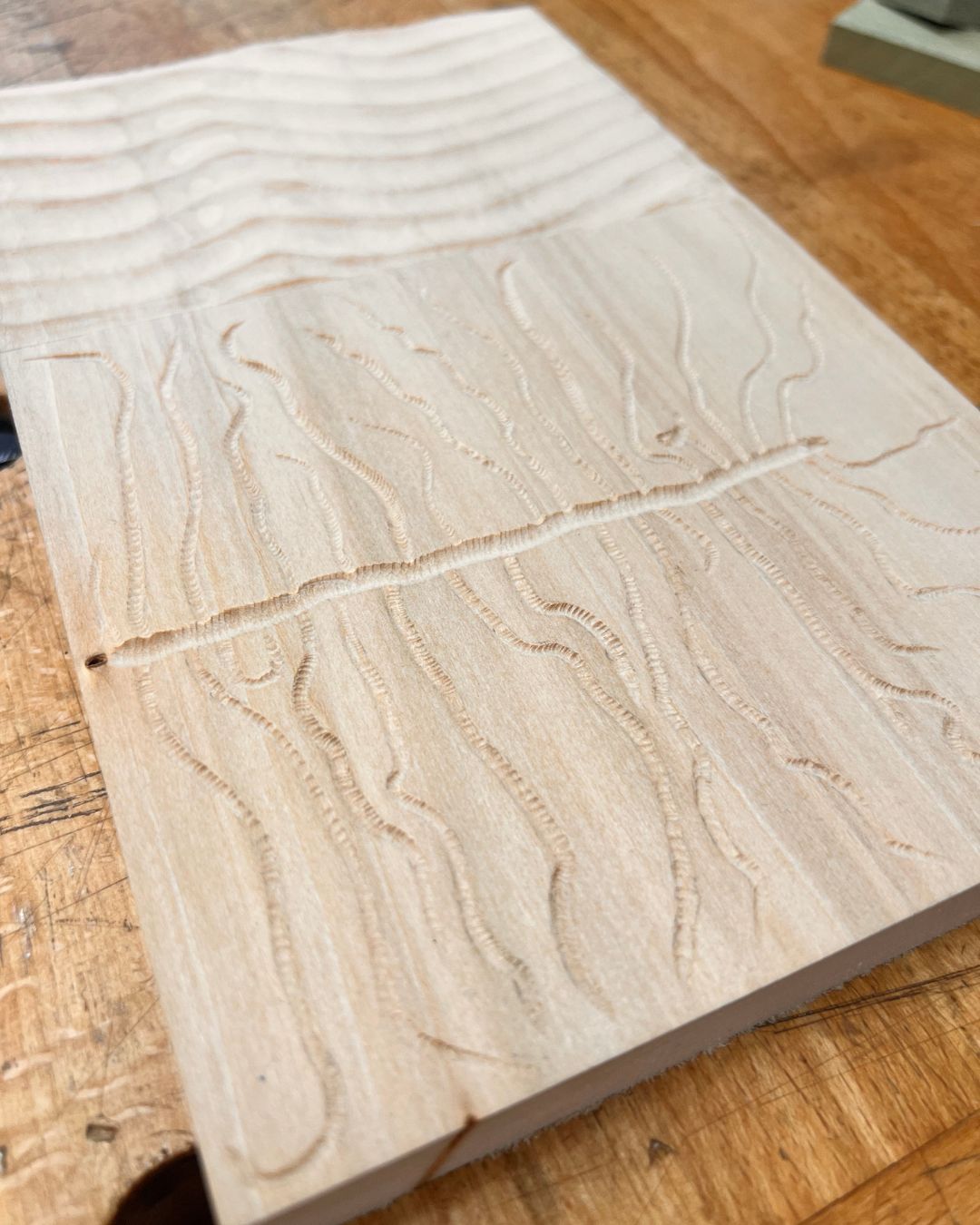
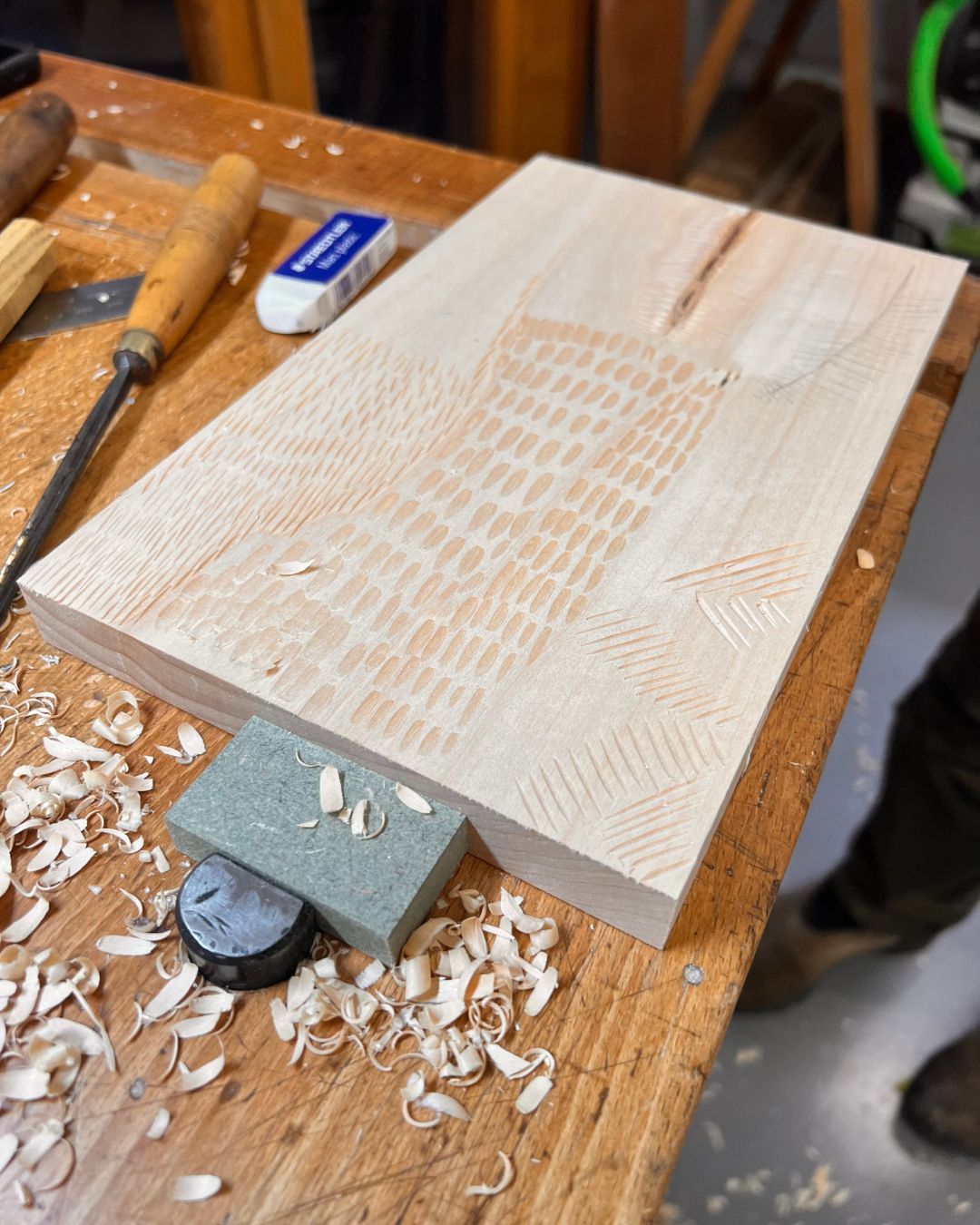
As you can see from the students’ practice pieces, the results have been wonderfully varied. There are different patterns, forms and approaches to the carving, including one rather brilliant carved handprint!
These exercises are also a useful introduction to thinking about how decorative details might be incorporated into a larger piece of furniture, something the students are now beginning to explore in their wall cabinets.
04 / THE FIRST FURNITURE PROJECT
On to the Wall Cabinet
With the foundation projects completed, the group has now moved on to one of our long-standing Designer Maker favourites: the Wall Hanging Cabinet.
This is a significant step up from the earlier exercises. For the first time, students are bringing together a much wider range of processes to make a complete piece of furniture, while also beginning to make decisions about its appearance.
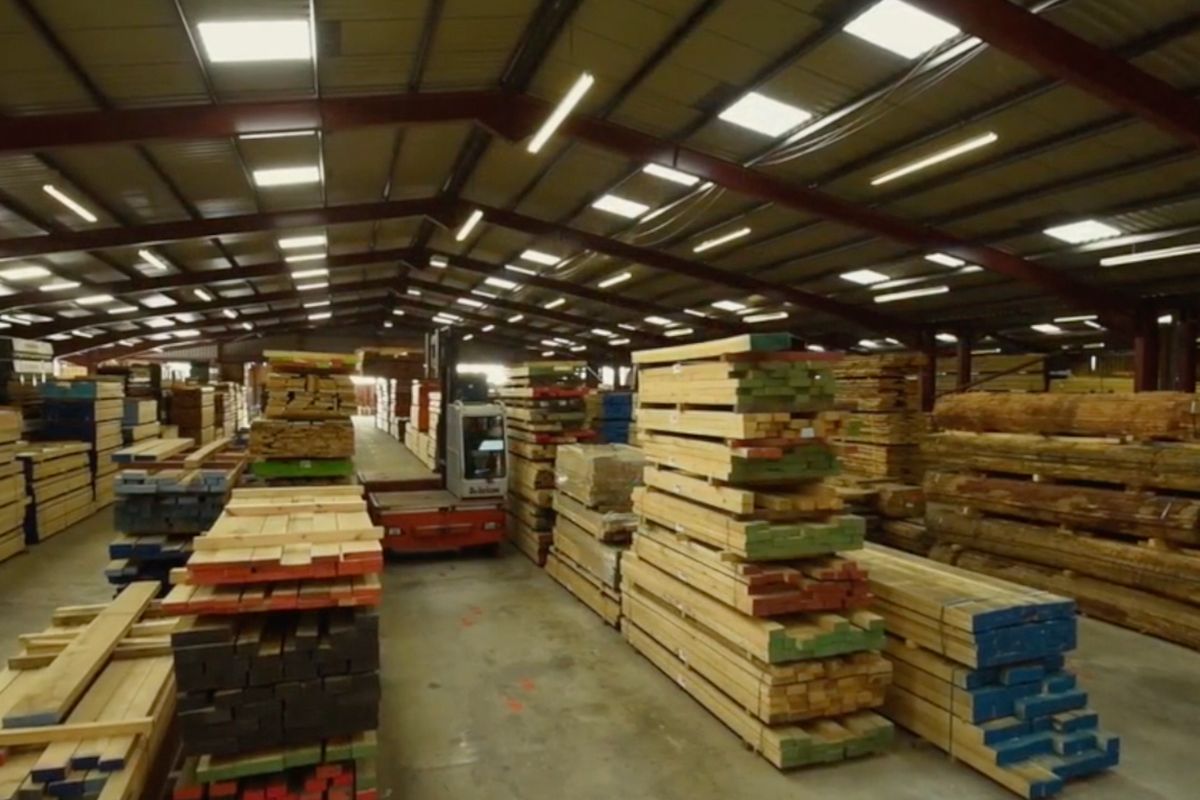
Before getting started, the students visited our friends at Duffield Timber, where they selected their own boards for the project.
Choosing timber is an important part of the process. Students begin to consider grain, colour, figure and how the material might work across the different components of the cabinet.
A Lot of Learning in One Cabinet
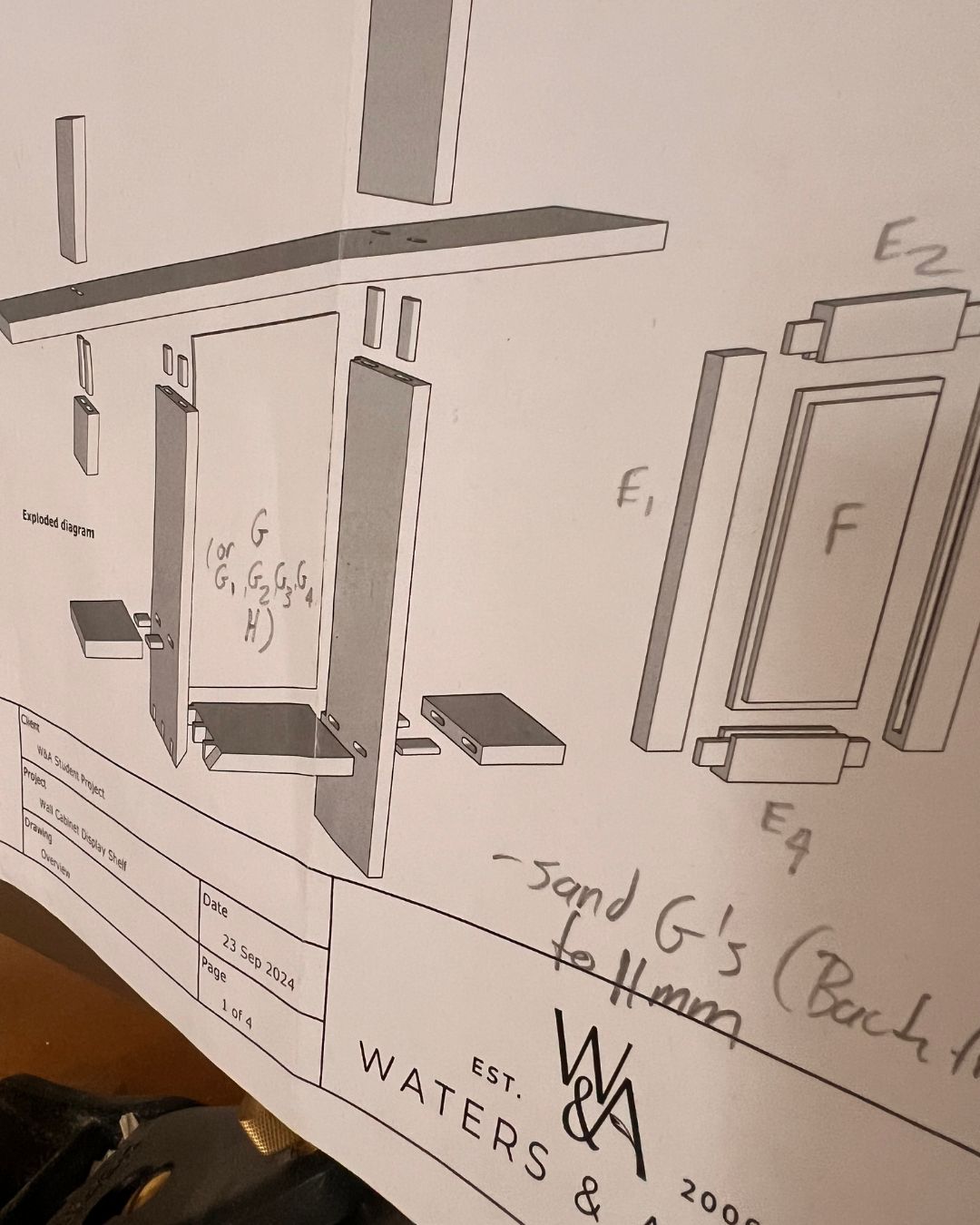
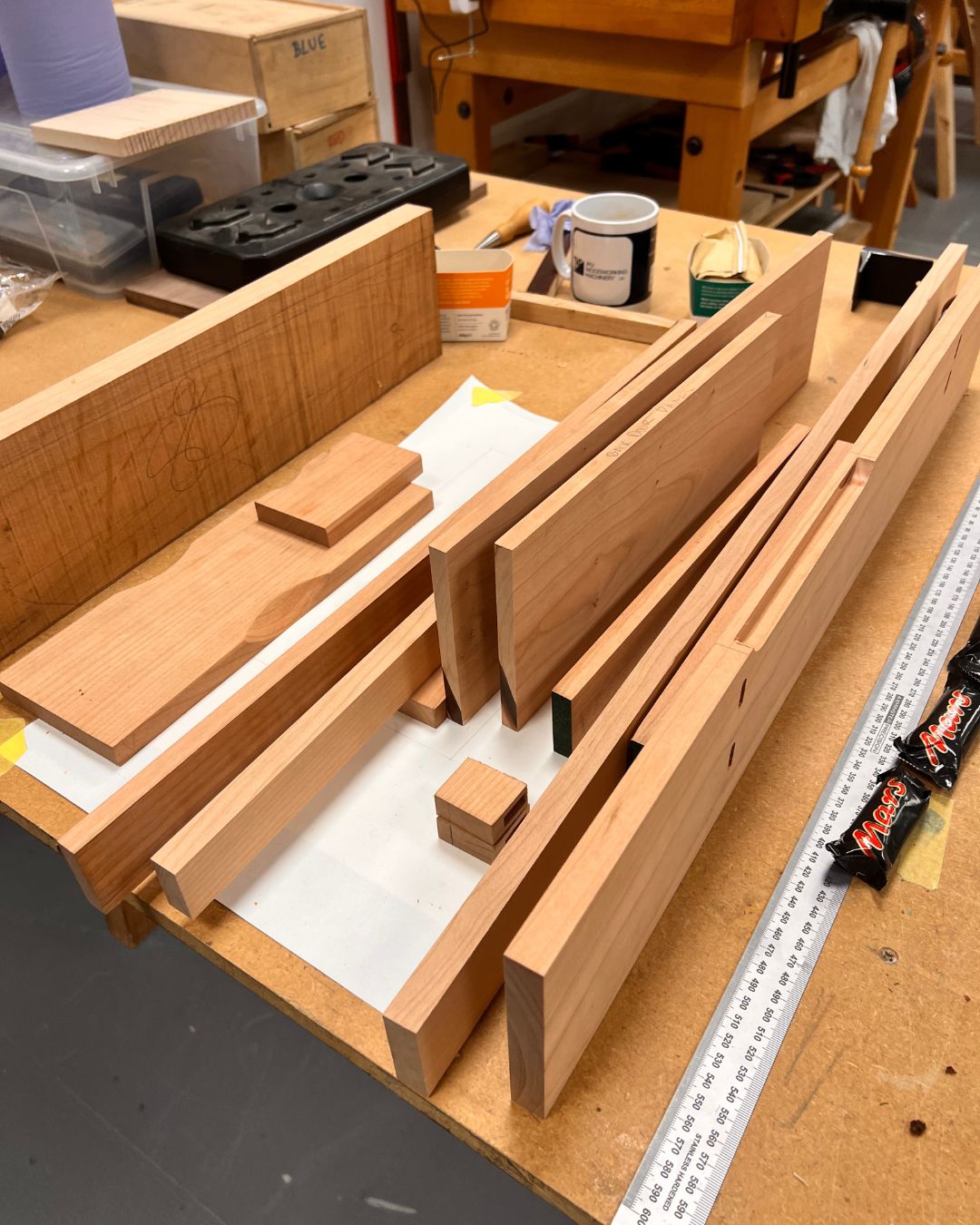
The project combines machine preparation, mitred dovetails, Domino joints, a frame-and-panel door, hand-cut mortice and tenon joinery and a veneered back panel.
It’s a substantial technical challenge, but there’s also room for creative decisions. Students are encouraged to explore hand shaping around the shelving, along with their own ideas for the door panel.
That might involve relief carving, inlay or another decorative treatment, with the aim of introducing some individuality while remaining focused on the core making skills.
From Drawings to Components
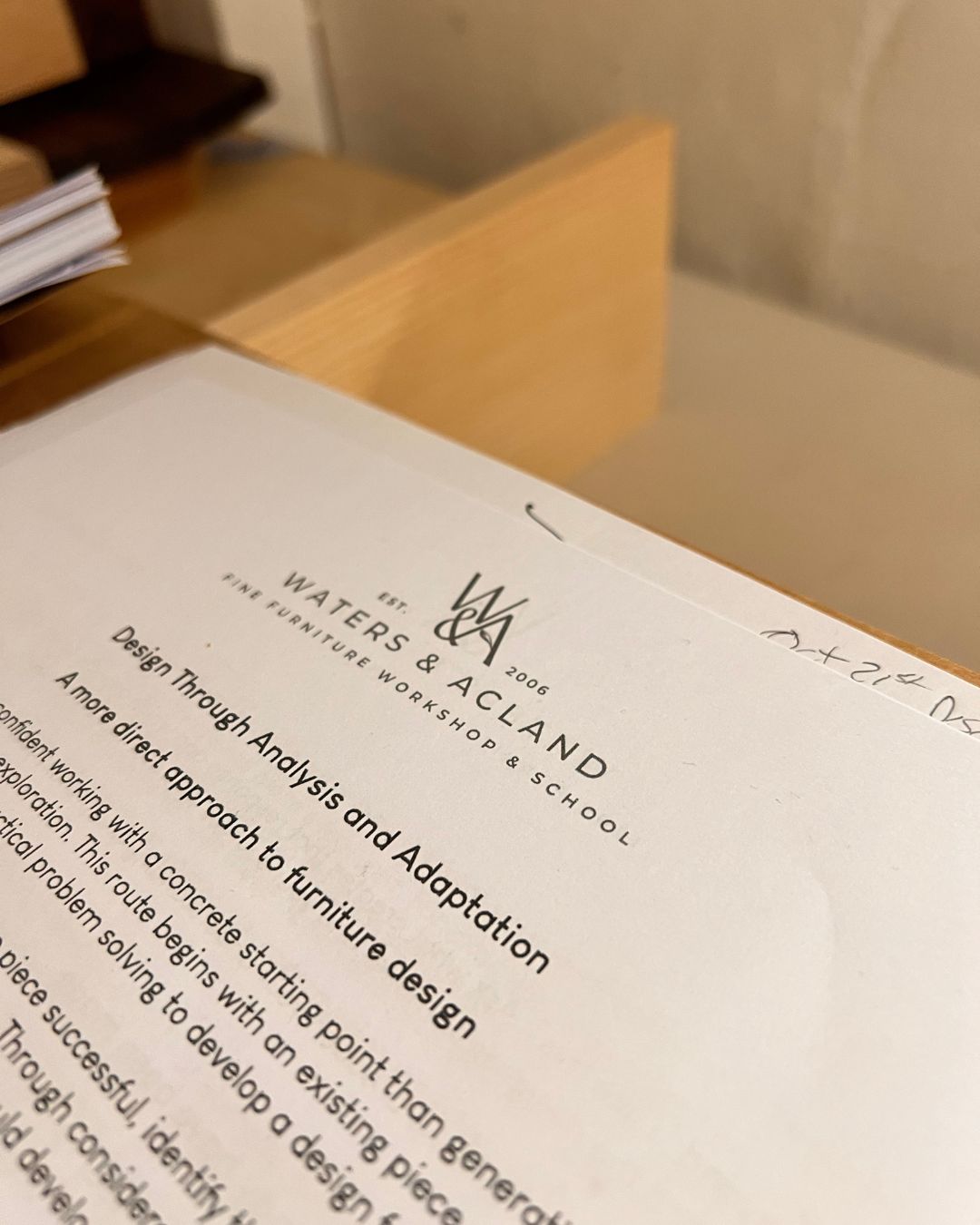
The students are now working their way through the various cabinet components, preparing their timber, establishing accurate dimensions and tackling the joinery.
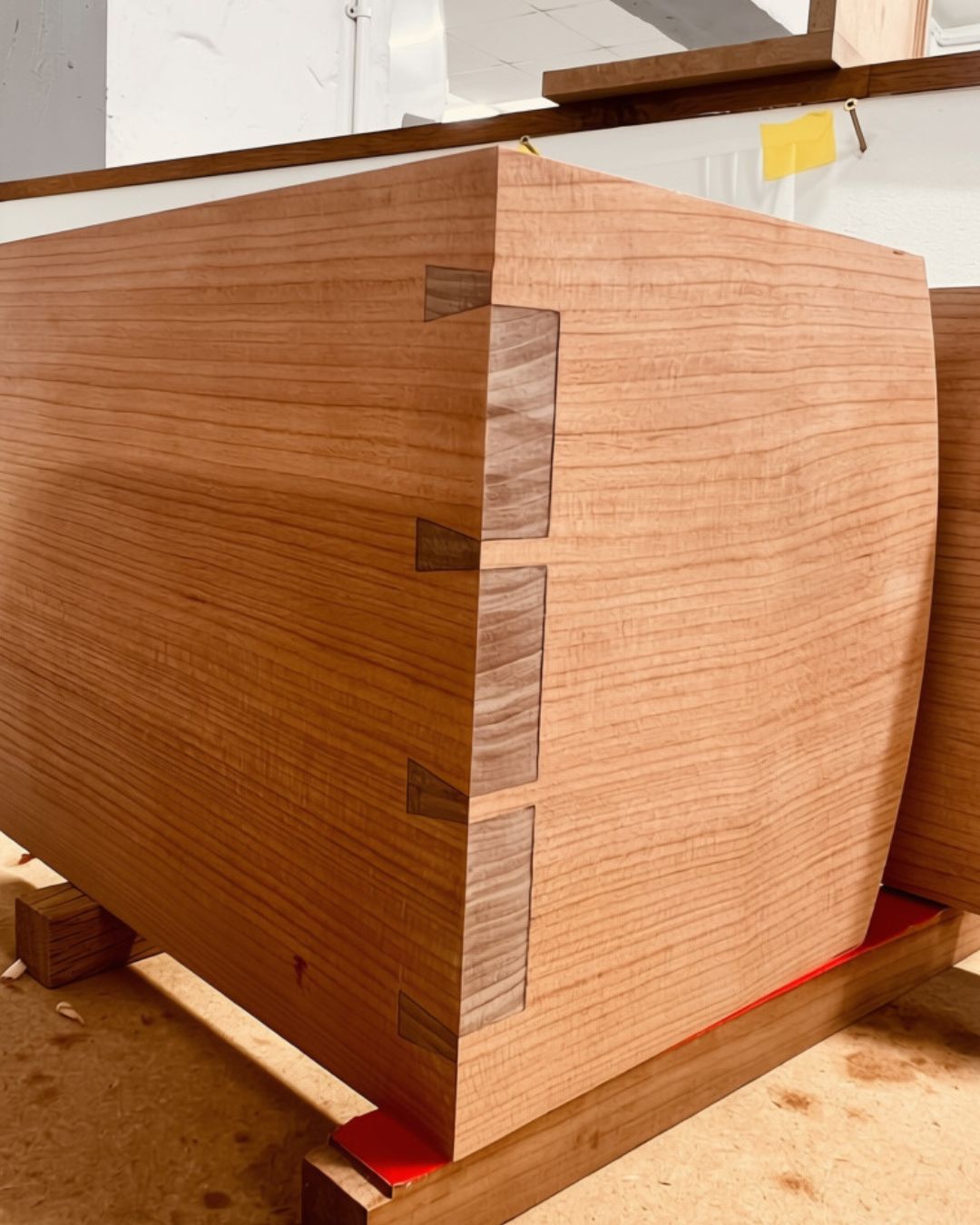
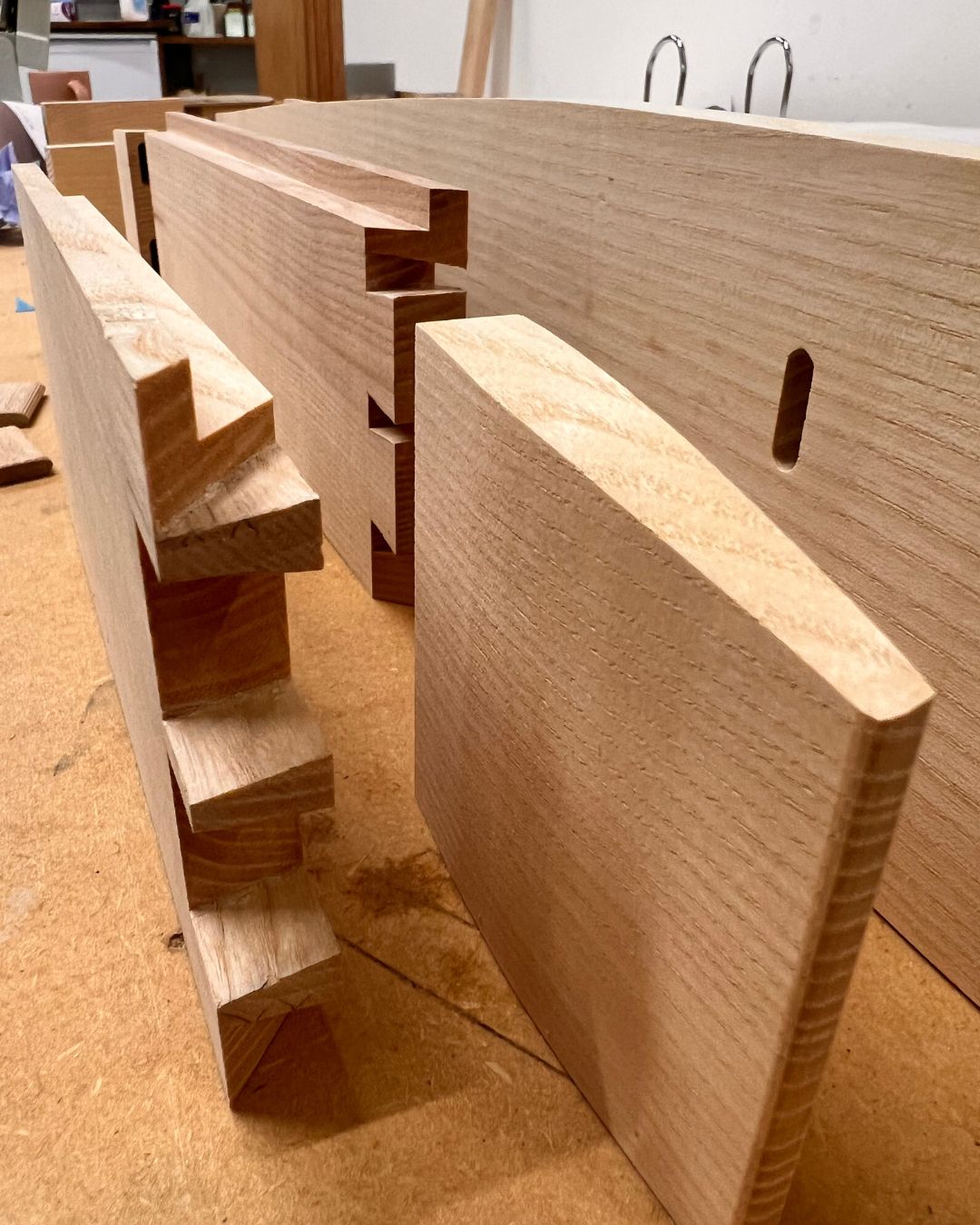
Mitred dovetails are among the more demanding details, combining the strength and accuracy of dovetail construction with a clean mitred appearance at the corner.
It’s a considerable progression from the bookends they were making only a short time ago, and exactly the sort of challenge those earlier exercises are designed to prepare them for.
Taking the Joinery Further
The cabinet’s mitred dovetailed corners are a particularly satisfying detail to see coming together.
They demand careful marking out and fitting, with very little room for error. The work builds directly on the hand-cut dovetails from the foundation projects, but introduces a new level of complexity.
Details Taking Shape
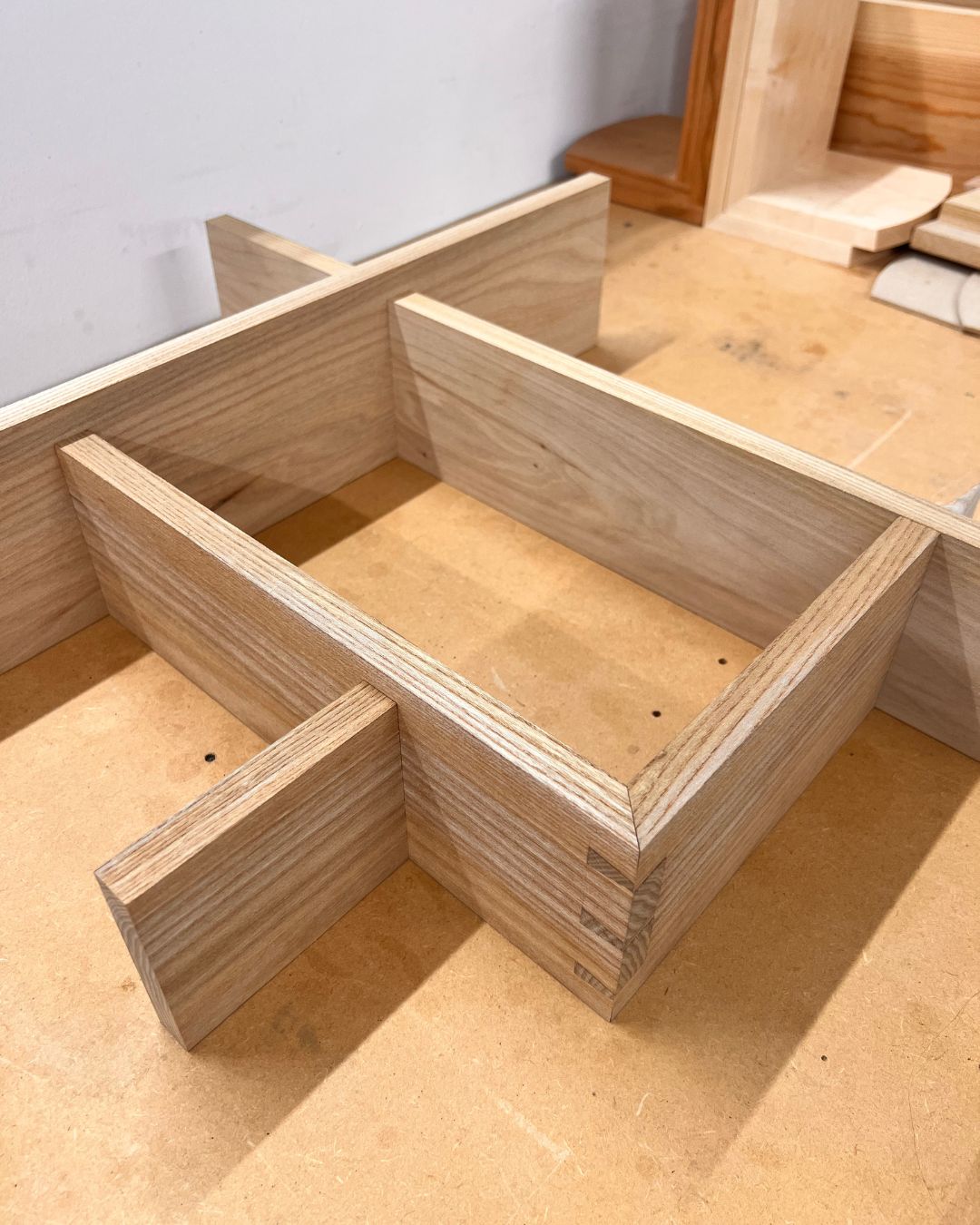
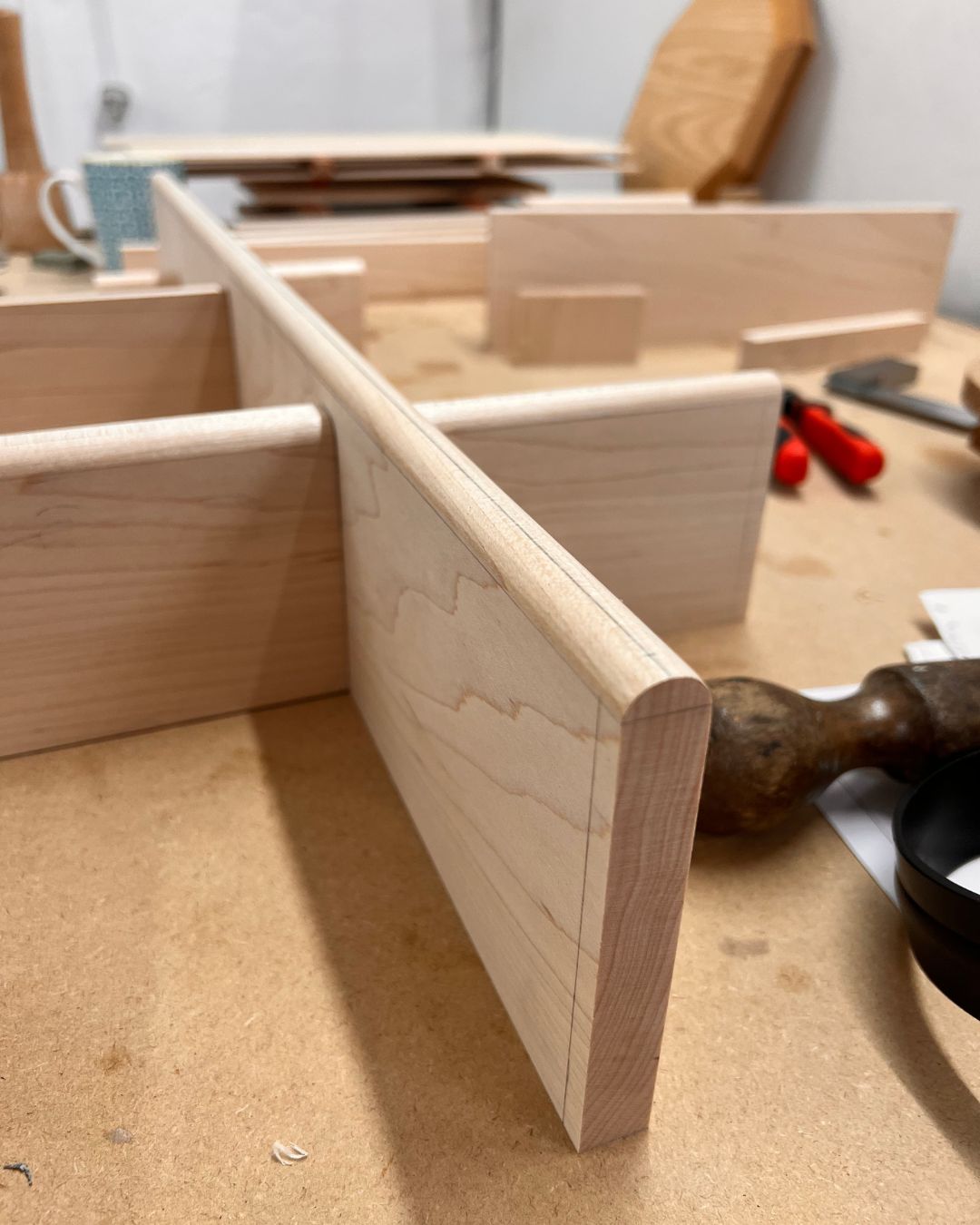
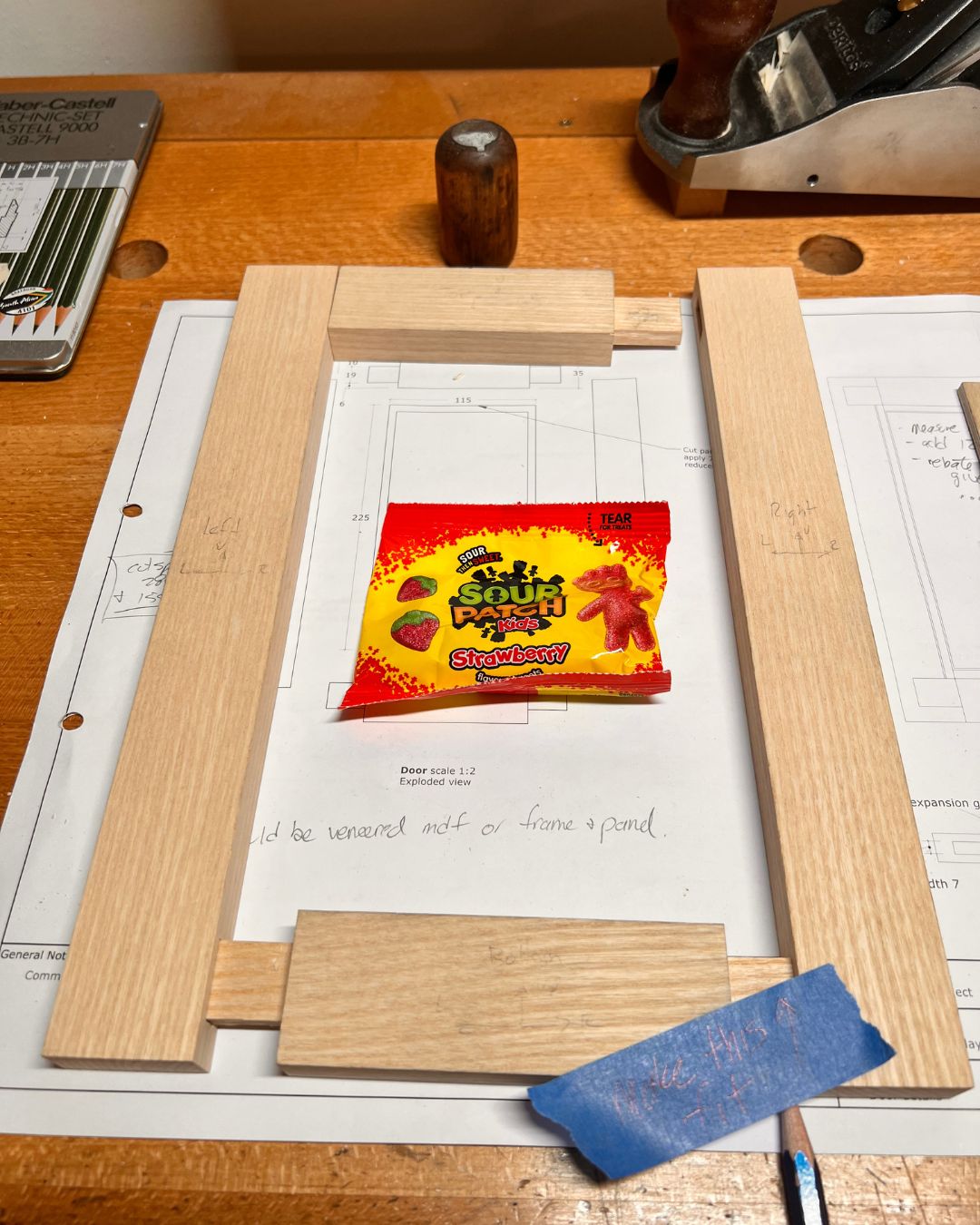
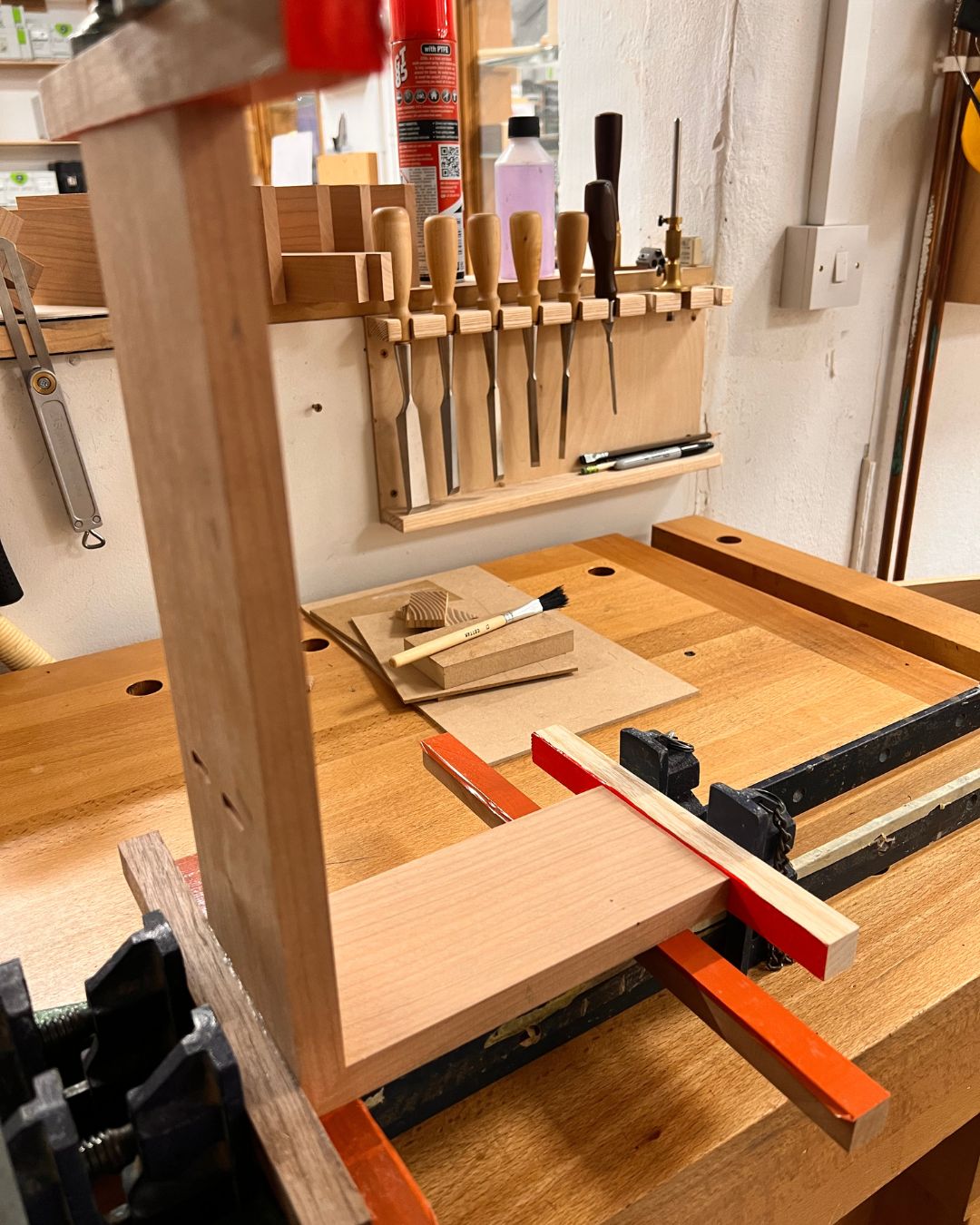
There’s plenty happening elsewhere on the cabinets too, from hand-shaped rounded profiles to mortise and tenon work for the doors, along with the careful business of gluing up the mitred corners.
These are still very much works in progress, but it’s already interesting to see the different approaches developing around the workshop.
After half-term, the students will continue bringing the various elements together, including their frame-and-panel doors, veneered backs and the hand-shaped details that will give each cabinet its own character.
DESIGN THROUGH MAKING
More Than a Technical Exercise
The Wall Hanging Cabinet is an important project because it begins to connect technical ability with design judgement.
For many students, this is the first time they’ve had to make meaningful decisions about the aesthetics of a piece. Where should a curve begin? How much shaping is appropriate? What happens when a particular detail is carried through several components?
These aren’t necessarily big design decisions yet, but they begin to develop an understanding of proportion, detail and how the making process influences the finished object.
It’s one of the central ideas behind our Designer Maker training: understanding process and understanding design aren’t separate things. Each informs the other.
05 / ELSEWHERE IN THE WORKSHOP
A Busy Week for Our Introduction Students Too
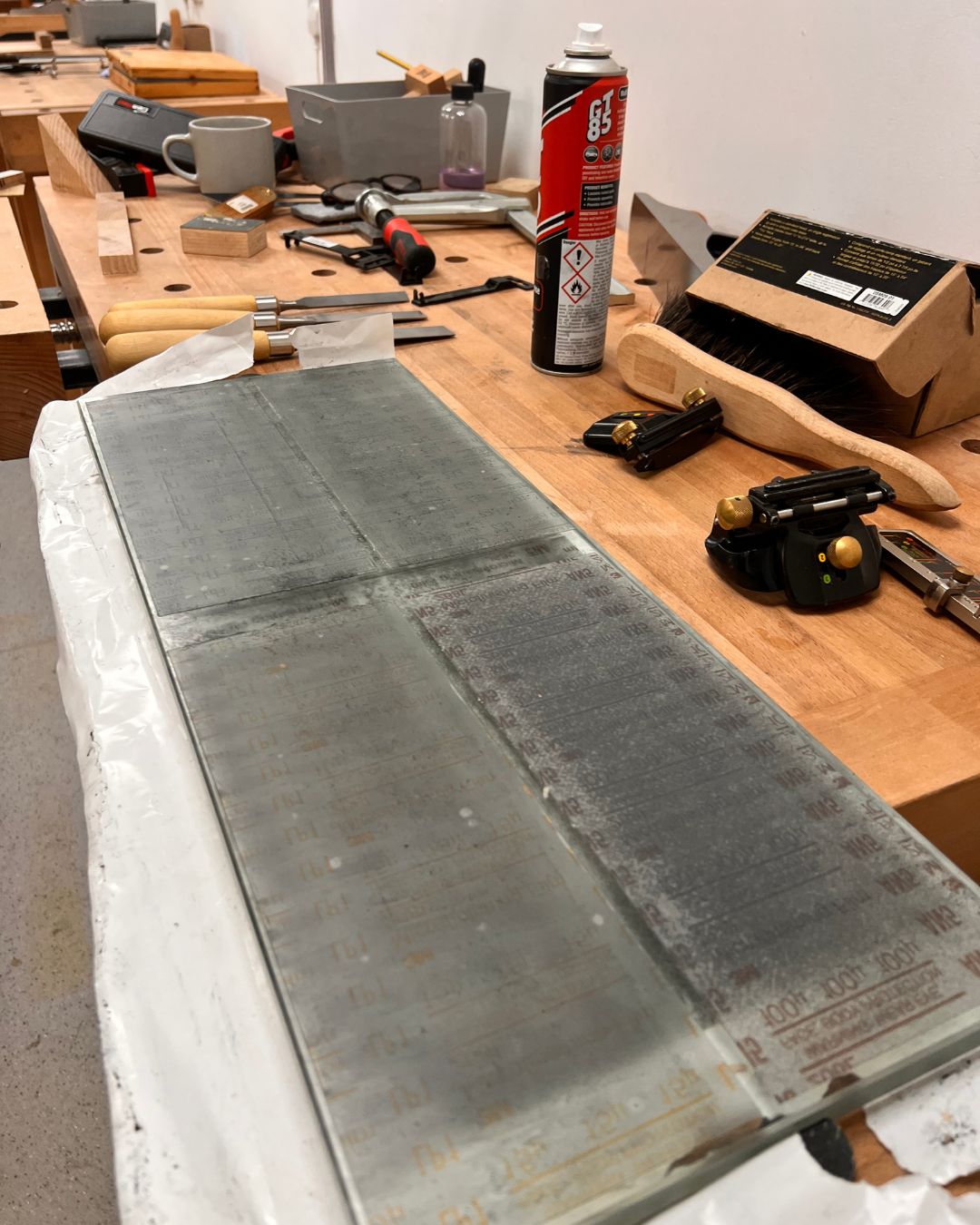
It’s not just the Designer Makers who’ve been busy. We’ve also had a new group joining us this week for our five-day Introduction to Fine Furniture Making course.
They’ve been working through some of the same essential foundation skills, beginning with tool preparation and sharpening before moving on to the octagonal breadboard and Chinese Puzzle.
It’s a great introduction to the accuracy and hand-tool techniques involved in fine furniture making, whether students are looking to develop a new interest or considering taking their skills further.
HALF A TERM DOWN
Plenty to Look Forward To
It’s been an excellent start to the year, and the progress across the workshop has been a pleasure to watch.
From those first sharpening sessions to the increasingly demanding joinery of the wall cabinets, the students are beginning to see how the different skills connect.
There’s still a great deal ahead, but for now it’s a well-earned half-term break. We’ll look forward to seeing the cabinets come together when everyone returns.
Applications Are Open
Interested in studying furniture making with us? Applications are now open for our next two and three-term Designer Maker courses, beginning September 2027.
JOIN US IN THE WORKSHOP
Upcoming Courses
Fancy developing your own furniture-making skills? We have a few remaining places on some of our upcoming short courses, along with opportunities to join our longer courses in 2027.
Introduction to Fine Furniture Making
Five days developing essential hand-tool skills, accurate marking out and the foundations of fine furniture making.
5-Day Joinery Table Course
Make a solid timber table while developing traditional joinery and fine furniture-making techniques.
5-Day Tri Table – Lamination & Veneering
Explore curved laminations, veneering and contemporary furniture-making techniques through our Tri Table project.
12-Week Furniture Making Course
An intensive twelve weeks developing the hand skills, joinery and furniture-making techniques needed to progress your work.
Starts 19 April · Very limited places → SEPTEMBER 2027Designer Maker – 2 & 3 Term
Our most comprehensive furniture-making courses, taking students from core hand skills and joinery through to designing and making their own furniture.
Applications now open →


Responses