
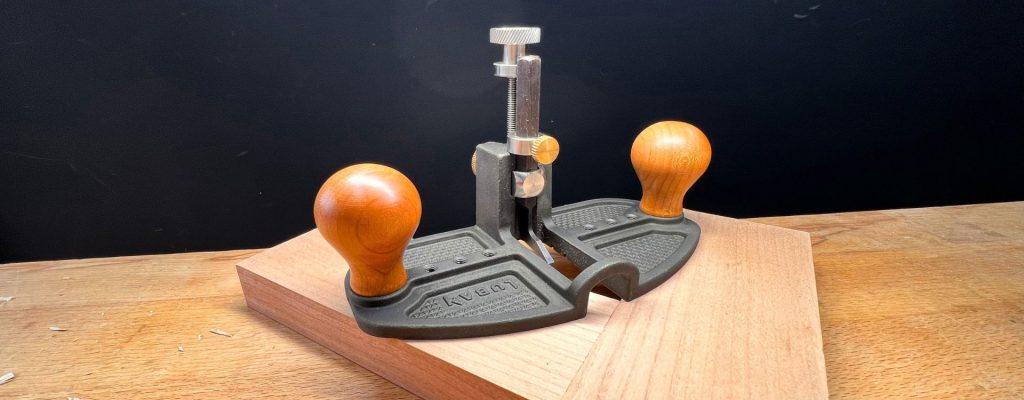
Quangsheng Large Router Plane Review

From the workshop · Tool review
Quangsheng Large Router Plane Review
Fine adjustments, clean tenon cheeks and a tool I quickly felt I could trust. We put the Quangsheng large router plane, supplied courtesy of Workshop Heaven, to work on four familiar furniture making tasks.
Workshop Heaven supplied the plane and additional cutters for this review. We have an existing relationship with Workshop Heaven, including a discount for our online school members. The observations below come from using this particular tool in our workshop.

For me, the real test of a router plane is how confidently you can approach your final depth. When you’re fitting a tenon, the last few shavings matter. You need to know that a small adjustment will give you a small, predictable cut, and that the blade will stay where you’ve set it.
That turned out to be the strongest part of this Quangsheng. After a few passes, I felt comfortable making very fine adjustments and working down towards the fit I wanted. By the end of the first test, I was impressed.
First impressions
The packaging is straightforward: plastic bags and a little bubble wrap. There’s no elaborate presentation, but the tool itself feels properly made. The cherry handles are comfortable, the finish is good, and the locking knob and depth adjuster feel substantial.
In the hand, it initially felt similar in weight to the Large Lie-Nielsen router planes I’m used to in the school, but putting it on the scales the Quangsheng was slightly heavier at 898g with the 6.5mm cutter fitted, or 965g with the fence attached. It feels solid and comfortable to use.
The cutters were another pleasant first impression. All felt sharp enough to get started. In fact, I used the standard cutter straight from the box for the tenon test, without honing it first. A light hone afterwards brought it back to a keen edge quickly.


The adjustment that makes the difference
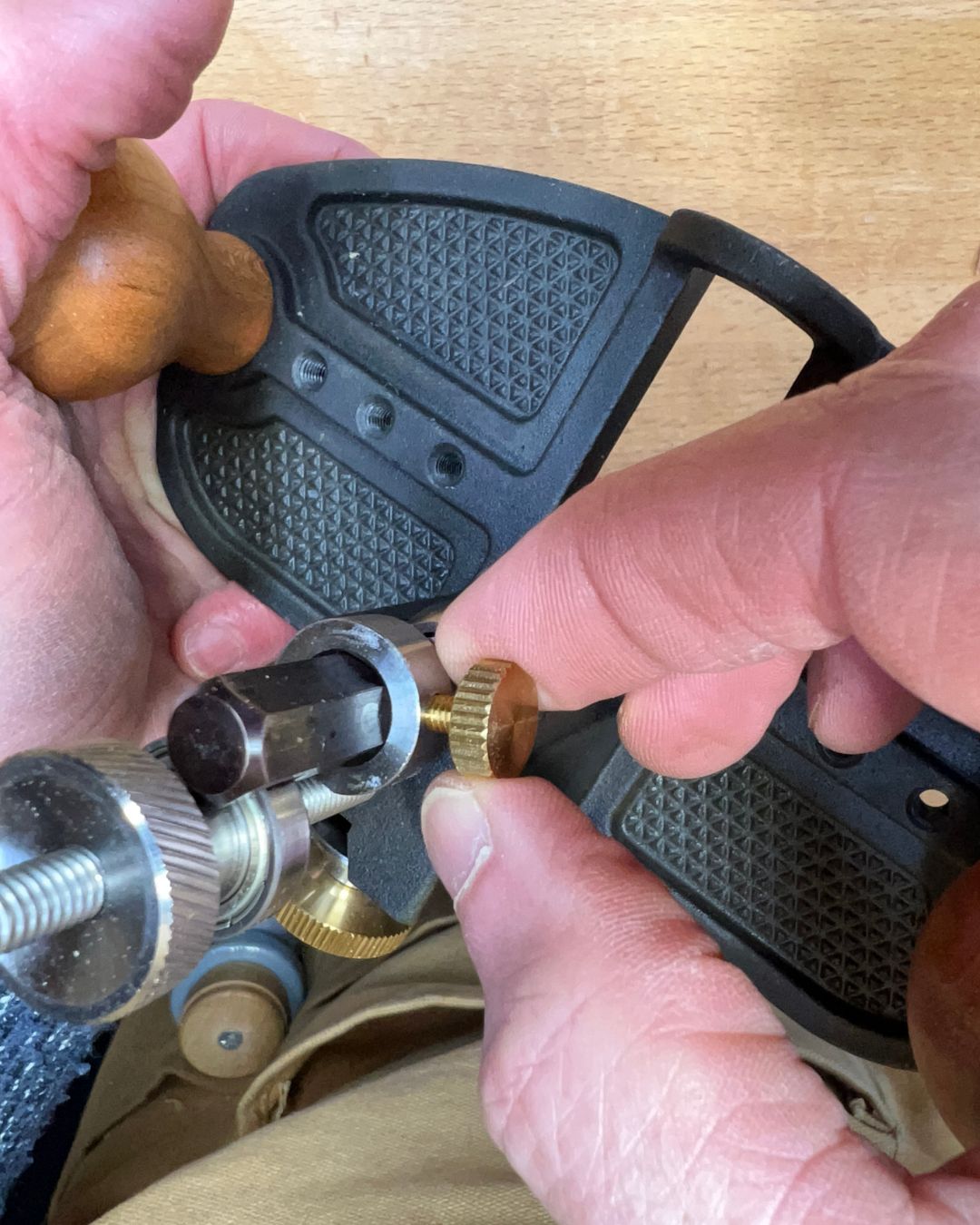
The depth adjuster incorporates a bearing, which engages with the slot at the top of the cutter. Workshop Heaven describes finding a setting on the retaining screw that holds the blade securely while still allowing depth adjustments without repeatedly releasing and tightening it. That was exactly the feature I wanted to try.
In use, it worked very well. With the locking knob set firmly enough to hold the blade, I could make small adjustments to the depth without touching the knob again. Each tiny turn gave me a fine, controlled shaving.
Our school’s Lie-Nielsen router planes have had years of use from students and professional makers. They’re excellent tools, but with those particular examples I’ve sometimes needed to take extra care over locking and adjustment to avoid a slight change in depth. This new Quangsheng felt very predictable. That’s a comparison with our well used workshop tools, rather than a like for like test of new planes.


Fitting a mortise and tenon
I started by cutting the mortise and bandsawing the tenon close to the marking lines, leaving the cheeks for the router plane to bring down to their final thickness. A chisel took care of the tenon’s width.
This is about more than getting the tenon into the mortise. The cheeks also determine how the faces of the two components line up, so you need to remove the right amount from each side.
I measured from the reference face of the mortised component to the corresponding mortise wall: 8.07mm in this test. As I approached my marking line on the tenon, I checked the depth from the matching reference face with digital callipers.
The readings were around 8.06–8.08mm as I refined the cut. I wouldn’t treat a calliper reading on wood as proof of hundredth of a mill accuracy, but it gives an indication of how fine the adjustments felt. More importantly, the joint itself fitted extremely well.
Working in from opposite sides of the cheek, the cuts met cleanly in the middle. There was no noticeable step from the blade moving between passes. Both cheeks came down nicely, and the dry fit brought the components together with the faces flush. It was one of the most satisfying tenon fits I’ve achieved with a router plane, and that was with the cutter straight from the box.


Cutting a dado across the grain
Next came a dado, or housing, in oak. I switched to a wider cutter, marked the sides and deepened the knife lines with a chisel before starting the cut.
This was a more demanding job. The first passes needed particular care, and I did get a little breakout despite preparing the edges. I gave the cutter a light hone before starting and touched it up during the test. Fine shavings and a keen edge made a difference.
The finished housing was good, but in our workshop I would usually reach for a powered router for this sort of material removal. If you work primarily with hand tools, the Quangsheng can do the job; it simply asks for more patience across the grain.


Grooving with the fence
For a groove running with the grain, I fitted the 3mm cutter and set the fence against the edge of the workpiece. This was an easier cut than the cross grain housing, and I used the cutter without sharpening it first.
The fence fits neatly and adjusts smoothly, but its short bearing surface means you need to pay attention to how you hold the plane. When establishing the groove, it’s possible to skew the tool if you aren’t maintaining steady contact against the edge.
Once I had the cut established, it worked well. My main reservation here is the care needed at the start, rather than the quality of the finished groove.
If I were cutting grooves with hand tools and had a plough plane available, that would often be my first choice. Its larger fence provides more support against the edge, and it’s a tool designed for the job. That does mean owning another plane, though. The Quangsheng offers a way to cut a groove with the same tool used here for tenon cheeks and hinge recesses.


Reversing the cutter for bullnose work
The cutter can also be fitted on the outside of the post. This is the bullnose arrangement: useful where the normal position would leave the body obstructing access, or where a clearer view of the cutting edge helps.
One possible use would be cleaning the last part of a recess beside an existing upright or obstruction, provided there’s enough room to support the sole. I tried the reversed position at the end of a groove. It gave better access, although the plane felt less naturally balanced than it did with the cutter underneath the body. You need to be more conscious of supporting it.


Photo sequence: reversing the cutter
These photographs show the changeover on our review tool.


Levelling a hinge mortise
For the final test, I marked out a hinge mortise, defined the edges with a chisel and made a series of chisel cuts across the waste to make the initial removal easier. I then used the pointed cutter to work towards the corners and level the bottom.
The pointed blade helps with access, but I still needed a chisel to sever fibres around the perimeter and tidy the corners as the recess deepened. The router plane’s contribution was its controlled, consistent depth.
This is a job where I’m very happy to work by hand, particularly for just a couple of hinges. The small depth adjustments felt reliable, and the depth stop gave me confidence that I could repeat the same setting on the next recess. For a run of cabinet hinges, that consistency is valuable.


What’s included?
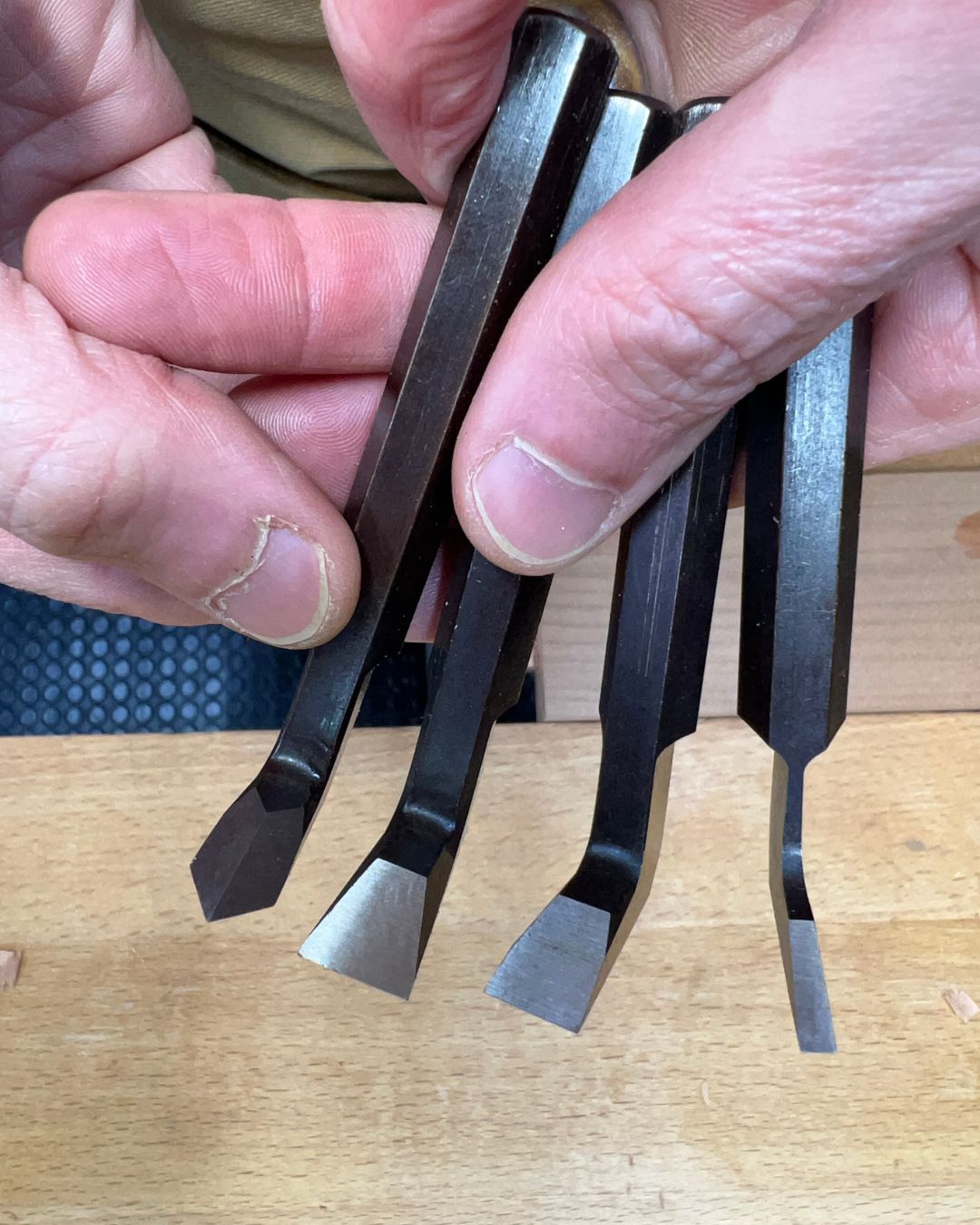
The standard Quangsheng costs £149.50 and comes with a 6.5mm cutter. At £179, the package adds four cutters: 3mm, 10mm and 12mm straight cutters, plus a 10mm pointed cutter.
The sole measures 178 × 83mm, and the listed maximum cutting depth is 26mm with the depth stop fitted. Ten threaded holes beneath the body provide mounting positions for the fence. These can also take M5 screws for a shop made subbase. The fence itself has two M5 tapped holes for fitting a custom fence for a particular task. See Workshop Heaven’s specifications and options.
How does the price compare?
The Quangsheng comes in comfortably below the UK prices we found for the Lie-Nielsen and Veritas. It’s worth looking at the included cutters and accessories as well as the price of the plane itself.
| Plane | UK price and cutters | Weight and dimensions | Fence and cutter positions |
|---|---|---|---|
| Quangsheng Large — Workshop Heaven |
£149.50 with a 6.5mm cutter. £179 with four extra cutters: 3mm, 10mm, 12mm and a 10mm pointed cutter. |
Measured on our review tool: 898g with the 6.5mm cutter fitted; 965g with the fence attached. Sole: 178 × 83mm. |
Fence supplied with our review tool. Reversed cutter position available. |
| Lie-Nielsen Large, open throat — Classic Hand Tools |
£259 with a 9.53mm cutter. Dedicated large-router blades are also available from Lie-Nielsen; UK prices not confirmed. Compatible small-router cutters can be used with the separately purchased adaptor. |
Approximately 748g. Overall dimensions: 209.6 × 88.9 × 95.3mm. |
Fence included according to Lie-Nielsen. Cutter can face the back. |
| Veritas Router Plane — Classic Hand Tools |
£210 including VAT. Includes two 12.7mm cutters: one straight and one pointed, plus a sharpening jig. Extensive range of additional blades available separately. |
Approximately 907g, according to the published specification.
Dimensions not stated in this retailer’s listing. |
Optional fence: £25.95. Plane and fence together: £235.95. Bullnose and lateral cutter positions available. |
Quangsheng’s sole dimensions and Lie-Nielsen’s overall dimensions are different measurements and should not be read as a direct footprint comparison. Imperial measurements have been converted to metric and rounded. Quangsheng weights were measured on our review tool; the other weights are published specifications, so fitted accessories may differ. The Veritas package shown is the two-cutter Classic Hand Tools listing. Prices and availability may change.
The Veritas also has an extensive range of additional cutters. Classic Hand Tools lists narrow blades from approximately 1.59mm to 6.35mm, including metric options, and wider 12.7mm and 19.05mm cutters. Listed blade prices range from £22 to £24, with most narrow cutters at £22.95. That gives it plenty of flexibility if you want to build up a selection for different jobs.
Lie-Nielsen also offers dedicated blades for its large router plane, including 6.35mm square-tip and pointed options, and 9.53mm pointed options. These are listed on the manufacturer’s US website; we haven’t confirmed UK pricing or availability. The separate small blade adaptor is needed only when fitting compatible small router blades to the large plane. View Lie-Nielsen’s blade options.
The Quangsheng’s £29.50 upgrade adds four cutters, making it an attractive way to cover several different jobs from the outset. Both Veritas and Lie-Nielsen also offer additional blade options, so the comparison depends on which cutters you’re likely to use and the cost of the complete package.
A vintage Stanley No. 71 is another route, but it belongs in a separate second hand comparison. Condition and completeness matter, and there isn’t a single current new-tool price to put alongside these. Common Woodworking’s buying guide discusses the Stanley and Record options as second-hand purchases.
Would I recommend it?
Yes. The fine depth adjustment was the highlight, closely followed by how well the standard cutter performed straight from the box. The tenon test was particularly convincing: clean cheeks, predictable cuts and an excellent fit.
There are qualifications. The small fence needs care, cross grain work in oak still demands a sharp edge and patience, and the reversed cutter position needs more attention to balance. I also can’t tell you how the adjustment will feel after years of use in a busy furniture school.
What I can say is that, based on these first tests, if this were hanging next to our Lie-Nielsen router planes, it’s the one I’d be inclined to reach for, simply because of the accuracy in adjustment. I’d be interested to revisit that opinion after a few years of regular use.
At £149.50 for the standard version, or £179 with the additional cutters, it feels like very good value for the work it delivered here.


Responses