

From the Velodrome to the Workbench: Steve Bate MBE’s Next Chapter

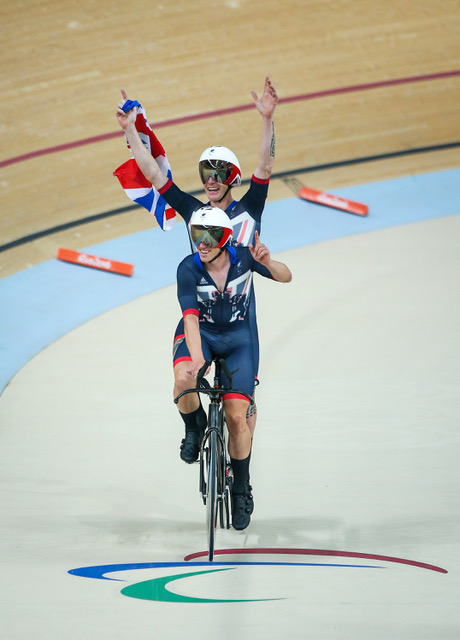
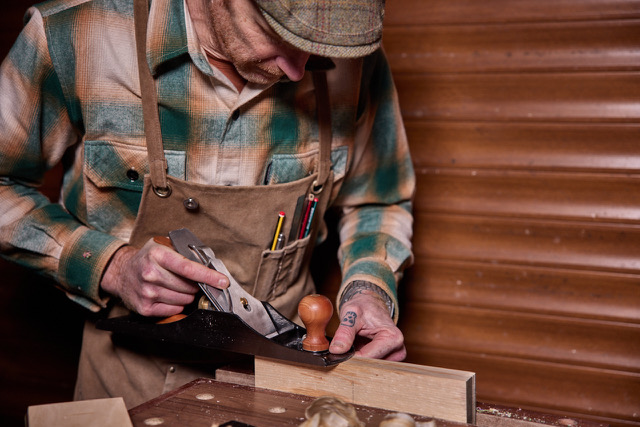
After more than a decade racing at the highest level of Paralympic sport, Steve Bate MBE has swapped the velodrome for the workshop.
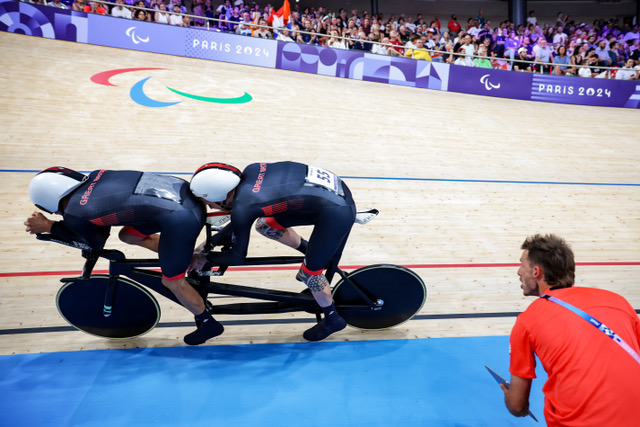
Diagnosed with a progressive visual impairment in 2011, Steve went on to build an extraordinary career as a Paralympic track cyclist, competing as a stoker on a tandem — riding behind a fully sighted pilot in a discipline that demands total trust, communication, and absolute consistency.
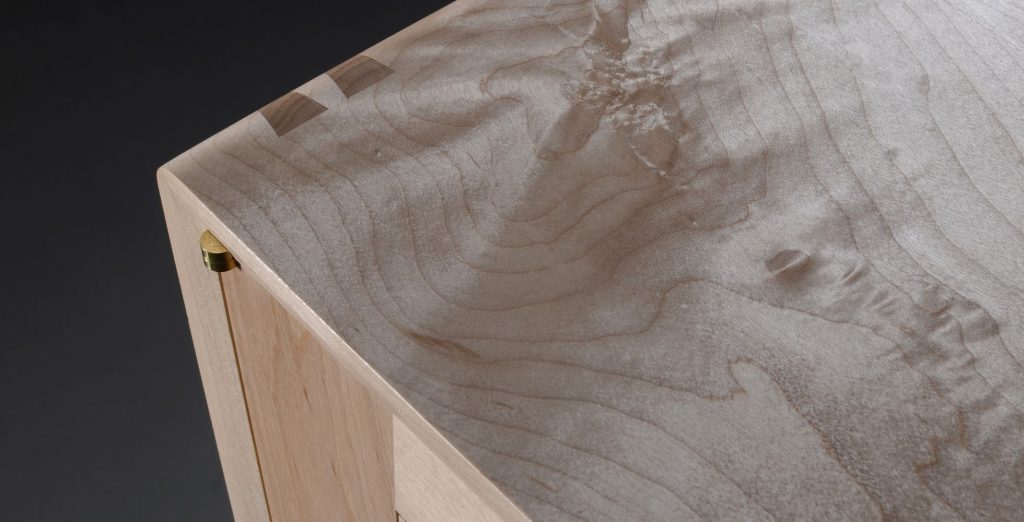
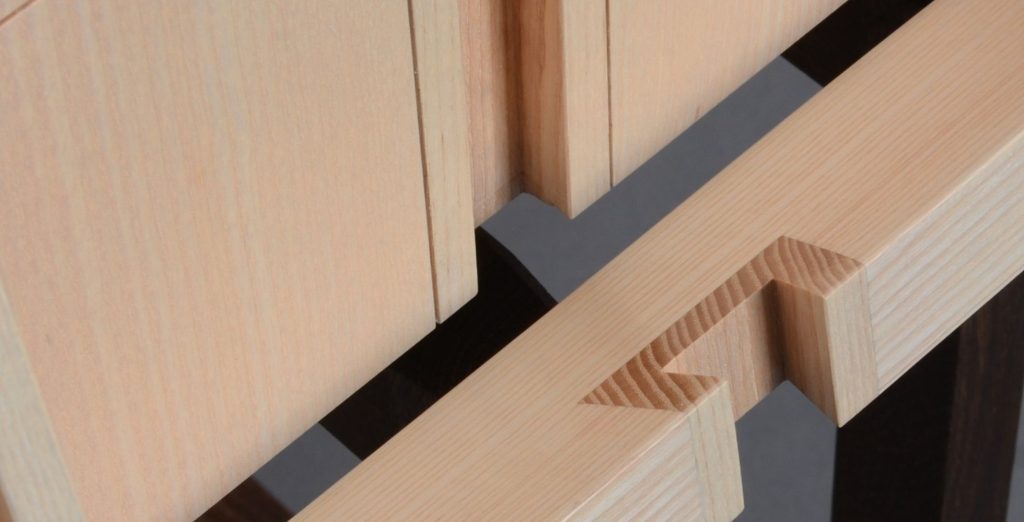
Retirement from elite cycling might have marked the end of one chapter, but it’s also been the beginning of another. Today, Steve is in the early stages of building a furniture making business, creating thoughtful, story-rich pieces from his workshop.
One recent commission beautifully connects these two worlds: a desk and coffee table made from reclaimed velodrome track boards — the very surface Steve trained and raced on for years, alongside teammates, rivals and some of the biggest names in British Cycling. Complete with original paint lines, repairs and scars from racing, the pieces carry not just the marks of competition, but a shared legacy, shaped by countless laps, crashes, victories and moments that defined an era of the sport.
Finding Cycling
Steve’s route into elite sport wasn’t straightforward. Following his diagnosis, it was a friend who first nudged him towards track cycling.
Following his diagnosis in 2011, Steve’s route into elite cycling came through a friend. Karen Darke, who was racing as a hand cyclist for British Cycling at the time, and one of the toughest competitors he knows, told him he would qualify to race on the back of a tandem with his eye condition. She even messaged him to say there was a talent identification day in Glasgow that he should attend.
He went along. It turned out to be a very good decision!
That nudge turned into a career that spanned over a decade.
A Paralympic Career
Steve was part of the British Cycling World Class Podium Programme for more than 12 years, competing at three Paralympic Games: Rio 2016, Tokyo 2020 and Paris 2024.
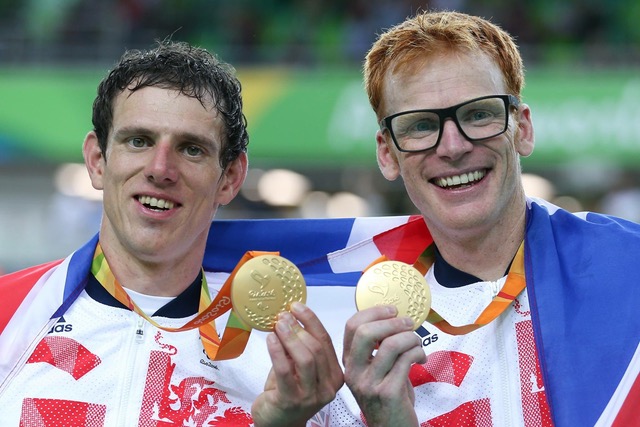
“I retired in October 2025 after the UCI Track World Championships, which we happened to win. So I finished my career how all athletes dream of — going out as a champion.”
Looking back, it’s the consistency, the people, and the shared experience that stand out most.
“I’m immensely proud of what the team achieved over that period. I feel incredibly privileged to have raced against the best in the world, travelled the globe, and worn the colours of British Cycling and ParalympicsGB. It was never easy, but easy has no value.”

Stepping Away — and Towards Making
Steve’s retirement was planned well in advance. After the Paris Games, he made the decision not to push on to LA 2028, instead choosing to finish on his own terms.
“I’m a carpenter by trade, but with my eyesight these days, going back on a building site would be too dangerous. I knew I wanted to work with my hands again and be creative.”
Furniture making offered something important: control and familiarity.
“If I set up my own workshop, I could learn my way around it and make it a space that worked for me. I decided to have a go at furniture making, and medal displays, and see where it led.”
Learning the Craft Online
While still competing, Steve joined the Waters & Acland online furniture school, using a UK Sport grant designed to support athletes’ education alongside training.
“Attending in-person courses while racing was really hard, so I started looking online and came across Waters & Acland. I emailed their online tutor, Gareth, and explained my situation, and he was incredibly helpful.”
What stood out most wasn’t just the content, but the support.
“The clarity of the teaching is fantastic, and it still amazes me how quickly Gareth answers questions. The community has grown massively too — there are some really clever makers in there now. I’ll admit I still haven’t finished all the projects… and I’ve been a member for three years! One day… maybe.”


Making with a Visual Impairment
Fine furniture making demands accuracy, patience, and attention to detail — all things that become more challenging with a visual impairment.
“It is a struggle, but mostly an enjoyable one. Getting the right light and getting my eyes to focus is tricky, but manageable. Like anyone, I get frustrated when I make mistakes.”
One of the biggest lessons has been learning to slow down.
“Accuracy takes time, especially when you’re starting out. Everything takes longer than you think it should. But that’s the learning process, and sport teaches you to focus on the process, not the outcome.”
Practical adaptations are part of daily life in the workshop.
“If I put a tool down and can’t see it straight away, it’s incredibly frustrating. That’s why my workshop is so tidy — if it wasn’t, I’d never find anything!”


Early Commissions
Steve has already begun taking on work for friends and people within the cycling community — though he’s not entirely comfortable with the word commissions.
“It sounds a bit fancy, and I’m not really a fancy kind of guy.”
Even so, the nerves are real.
“The first few were nerve-racking, and I still get that feeling when you show a piece to someone for the first time. You hope they love it, and so far, they seem to. I’m not sure that feeling will ever go away, but I think that just means you care.”
The Velodrome Pieces
One of Steve’s most meaningful projects so far has been working with reclaimed boards from a velodrome track — Siberian pine that once formed the surface he trained and raced on for years.
“These boards aren’t nice to work with. They’re never straight, full of nails and splinters, incredibly dry, blackened with rubber, ingrained with sweat, skin, blood — and God knows what else!”
But that history is exactly the point.
“I’ve spent hours of my life riding on those boards. The track I’ve got dates from 2011–2019, so if you think about it, the who’s who of British Cycling has ridden on them. That shared experience is all in the timber.”
Rather than sanding the boards back to something clean and anonymous, Steve chose to preserve that story.
“I tried sanding a couple clean and immediately knew it was a mistake — they just looked like any pine boards. Now I clean them gently with wire wool and keep the paint lines and marks. That’s where the meaning is.”


A Desk for a Teammate
One desk, made from those boards, was commissioned by a fellow athlete.
“To be trusted with something like that, especially for a teammate, was really cool. I was buzzing watching the desktop come to life — I wanted it to be perfect.”
When the desk was collected, the moment was simple and quietly powerful.
“We just sat in the workshop staring at it. Now he gets to work at it every day, which is pretty special. It was hard to see it go — but I’ve got a little stash set aside for our own dining table, so I’m excited about that.”

Looking Ahead
For Steve, the goals are clear, but grounded.
“I want to keep enjoying the process and hopefully make a living from it.”
There’s also a familiar benchmark.
“I’ve set myself a goal of winning some kind of maker’s award within two and a half years. It took me that long to win my first Paralympic gold medal, so that feels about right.”
Whether or not that happens isn’t the point.
“As long as that’s what I’m striving for, I know I’m heading in the right direction.”
Thank you, Steve, for sharing your story and journey into furniture making. We wish you every success and can’t wait to see what comes next in the workshop. Photo credit also to Steve Bate: Instagram @stevebatewoodcraft 🙌🏻 📸
Upcoming Courses
We still have a small number of places available on several upcoming courses:
– Introduction to Furniture Making 5-day course starting 2nd February — 2 places left. Next course starting 9th March — 2 places left
– 12-Week Long Course Starting 12th April — very limited places remaining
– Tri Table Making – Laminating & Veneering 5-day course starting 9th February — only 2 places left
– Dovetailed Box Making 10-day course starting 16th March
– 4-Week Furniture Making Course Starting 29th June — spaces available
– Designer Maker Course Our next Designer Maker course starts in September and is nearly full. The course is available in 2- or 3-term options. The 2-term option can be a particularly good fit for international students and may align with a 26-week study visa (subject to current visa requirements).
Short course bookings can be made online. For long course enquiries, please contact Oliver Waters at: school@watersandacland.co.uk
For full details on all courses, visit:

Wow, what a great story!
It’s a fantastic story. Even though we’ve never met, I feel like I know Steve because his work is personal and revealing. Congratulations on your success as a cyclist and your future success as a craftsman. Cheers.